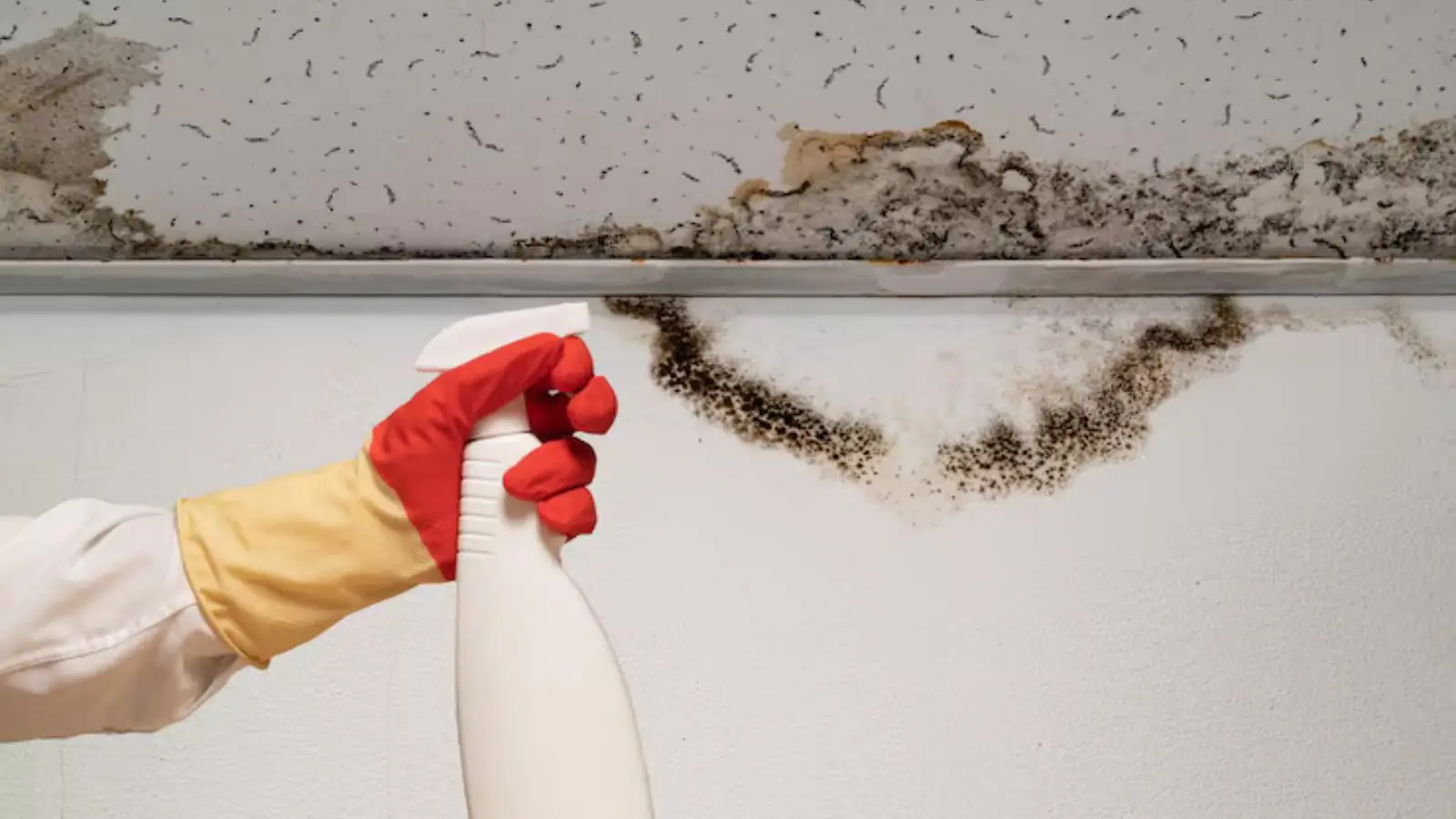
A dark stain spreading across a ceiling is rarely a paint problem. It tells you water has been reaching that spot, and mold needs moisture to grow. If you are looking at black or dark patches overhead right now, the first job is finding where the water comes from, and professional mold remediation only makes sense after that.
This guide covers the usual leak sources, why a coat of paint fails, what removal and ceiling repair involve, and when drywall has to be cut out. It also says plainly when a small spot is a cleaning job. Color alone cannot tell you what the growth is, so nobody should name it from a photo.
Three leaks that usually sit above a stained ceiling
Roofs are the first suspect. A cracked tile, a lifted flashing edge or a worn patch around a vent lets water into the attic, where it soaks insulation and then drywall. The stain often shows up a few feet away from the actual opening because water runs along framing before it drops.
The second is the bathroom above. A failed toilet wax ring, a loose tub drain or a tired supply line drips into the ceiling below with every use. The third is the air conditioner. A clogged condensate line or a rusted drain pan can overflow slowly and keep one patch of ceiling damp for weeks.
Why paint does not solve it
Paint covers color. It does not dry out the drywall, stop the leak or remove what is growing underneath. Mold can keep living on the paper face of the board and in the insulation above it, and the stain usually bleeds back through the new coat.
There is a second problem. Fresh paint on a damp ceiling blisters and peels, which hides the real extent of the damage and delays the repair. If the surface has ever been wet, find out how far the moisture runs before anyone picks up a roller.
Landlords and flippers sometimes paint first and ask questions later. If you are buying or renting, a fresh coat on one ceiling patch is a reason to ask what happened there and to request a moisture reading.
Finding the edges of the damage
A visible stain is only the part you can see. A moisture meter reads how wet the board is, and a thermal imaging camera shows cooler, damp zones that look normal to the eye. Together they map where drywall is wet, damp or dry.
This matters because two ceilings with the same stain can need very different work. One may have a dry, old mark from a repaired leak. The other may have wet insulation spreading sideways toward a light fixture or an exhaust fan.
A good technician also checks the attic side when it can be reached safely. Wet insulation or a darkened rafter above the stain tells you whether the roof, the plumbing or the AC is the culprit.
When the drywall has to be cut out
Drywall that stays wet usually has to be cut out. Mold on its paper face is hard to remove without taking the board, and soaked gypsum loses strength and sags. A ceiling that is soft, bowed or crumbling when pressed should be treated as a removal job.
A hard, dry, lightly marked patch is a different case. If the leak was fixed long ago and the surface is firm, a technician may be able to clean or seal it in place. A moisture reading settles that question better than a guess does.
- Cut out: wet, soft, sagging or stained through the board
- Cut out: wet insulation above the ceiling
- Possibly cleanable: small, firm, dry surface mark with the source fixed
What removal and ceiling repair look like
The work area is sealed with plastic sheeting so dust stays out of the rest of the house. Affected board and insulation are cut out in sections, bagged and carried out, and a HEPA air scrubber runs during the work. Containment and removal follow ANSI/IICRC S520.
Once the framing is dry, the ceiling is rebuilt. That means new drywall, taping, texture matching and paint, and it is often handled as water damage repair after the mold work is done. You get the scope and a price you understand before any ceiling comes down.
Small spot or professional job
A spot smaller than a hand on a painted, dry ceiling with no active leak can be a cleaning job. Wear gloves, eye protection and a mask, wipe with detergent and water, and let it dry fully. Do not sand it or scrub it dry.
Call a professional when the stain is larger, keeps returning, sits under a bathroom or the roof, or comes with a damp smell. Anyone with health concerns should stay out of the room and ask a physician about symptoms. Homes near Coachella are covered on the same schedule.
Heat, roofs and irrigation around Thermal homes
Summers here bring many days over 110 degrees F, so air conditioners run for months with little rest. A condensate line that clogs in that load can drip into a ceiling long before a stain appears. Check the drain pan and line before the hot season, and look at the ceiling near the air handler whenever the system sounds different.
Those same temperatures bake roofs, and the few inches of rain in an average year can arrive hard and fast. A roof that sat dry for months may show its weak spots in the first heavy storm. Inspect ceilings under the roof within a day of any hard rain.
Farm fields surround the community, and irrigation is part of daily life. Sprinkler spray against a wall or eave adds moisture to the building edge. Aim sprinklers off the siding, and keep an eye out for stains on ceilings near the exterior walls. If your home is out toward Mecca, our Mecca crews work the same 24/7 dispatch.
Mold questions from Thermal homeowners
No. Primer hides color but leaves the moisture and the growth in place. The ceiling needs to be checked with a moisture meter and the leak fixed first.
Look for a stain that grows after a shower, an AC cycle or rain. A moisture meter reading that stays high days later also points to an active source. If in doubt, call and describe where the stain is.
Insurers tend to look at the cause, and a sudden break is treated differently from a leak that ran for months. Check your policy and ask your insurer before work begins, and keep photos of the damage.
It is one of the common causes we hear about. With air conditioning running most of the day, a clogged line or full drain pan can overflow into the ceiling below an attic unit. Clearing the line early can save you from opening the ceiling at all.