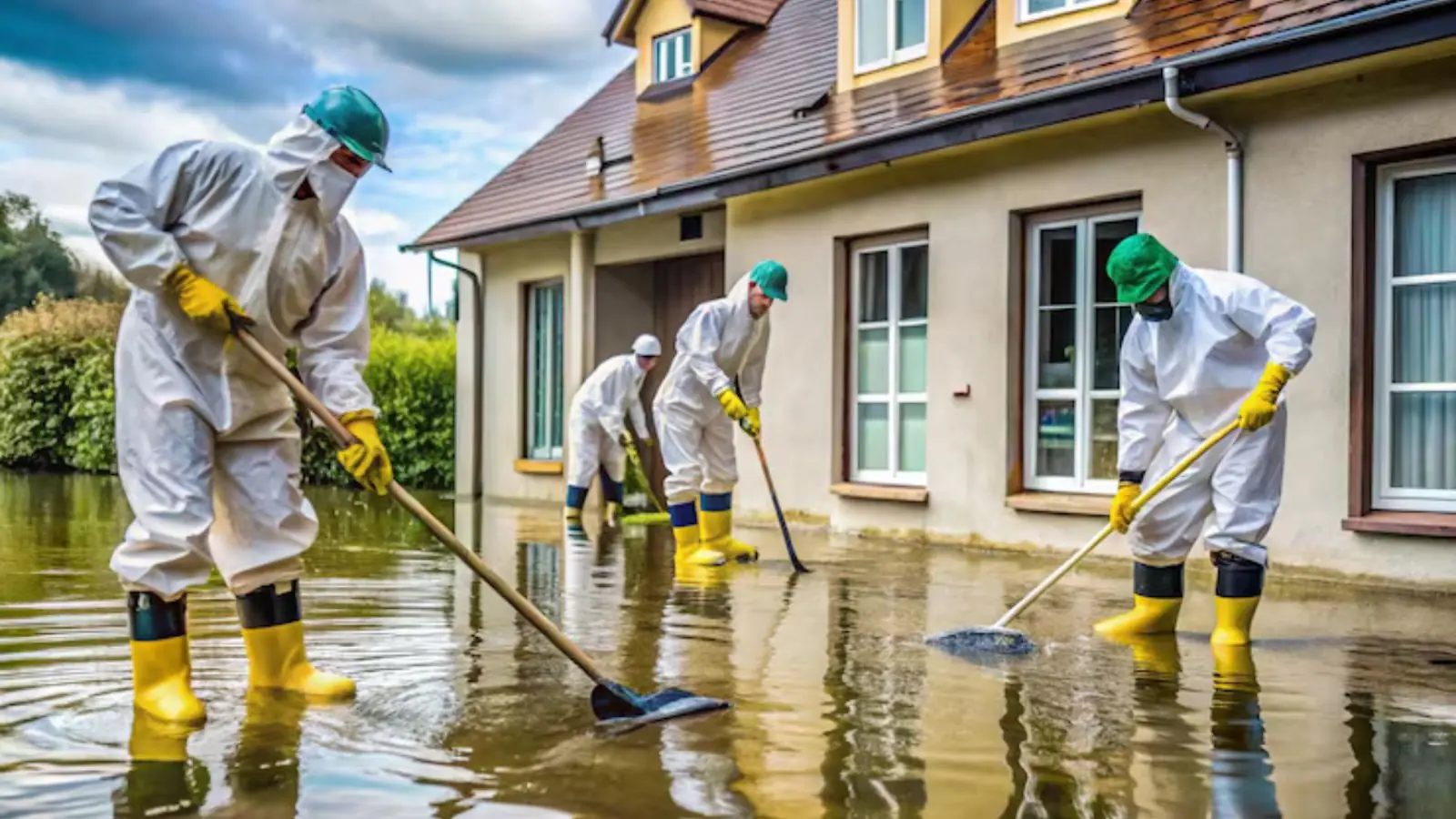
Floodwater in a home is an emergency, and it is not the same problem as a broken pipe. Water that comes in from outdoors carries soil, runoff and bacteria, so it is treated as contaminated from the first minute. Call (760) 769-1159 any time, because the line is open 24/7, and stay out of the water until a crew tells you it is safe.
Flood damage restoration covers storm runoff, rising groundwater, overflowing drains and sewage backups. The work includes pumping, removal of contaminated materials, cleaning and disinfecting, structural drying and the rebuild plan.
Why storms are rare here but can hit hard
The eastern Coachella Valley is a desert, with very hot summers and only a few inches of rain in an average year. That makes heavy rain feel like a once-in-a-while surprise, and homes here are not always set up to shed it. In 2023, Tropical Storm Hilary brought heavy rain across the valley, Indio declared a local emergency, and a shelter opened in Thermal.
A stormwater channel project reach near here is even named for the Thermal Drop Structure, because runoff in this part of the valley is routed toward the Salton Sea. Check the FEMA Flood Map Service Center for your address, and ask your insurer whether your policy covers flood, because standard homeowners policies typically exclude it.
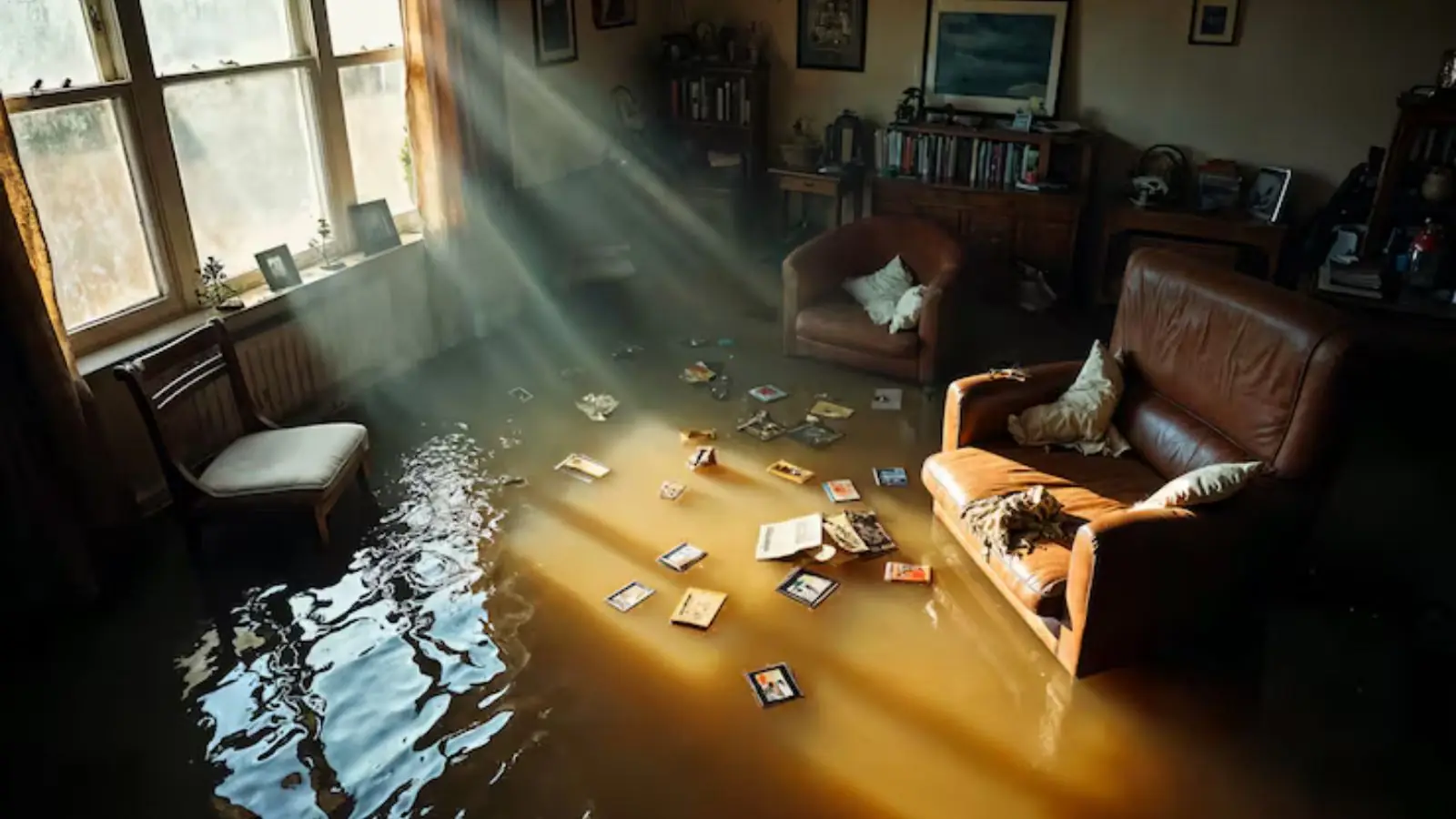
If water is still spreading, do this first
Floodwater safety rules are stricter than for clean leaks. Follow them even if the water looks shallow.
Get out of the water
Do not wade through floodwater. It can hide sharp debris and may carry electrical current from a wet panel or outlet.
Cut power only if dry
Switch off the main breaker only if the panel is dry and you can reach it without stepping in water. Otherwise call the utility.
Protect people and pets
Keep children, pets and anyone with open cuts away from the water and the mud it leaves.
Move what is safe
Lift valuables and papers to higher shelves and a dry room if you can do it without entering the water.
Document the damage
Photograph the water line on the walls and the damaged contents before cleanup starts.
Call the 24/7 line
Tell the dispatcher where the water came from, how deep it is and whether sewage is involved.
Gas and electrical risks come before everything
If you smell gas, hear buzzing, or see sparks, leave the building and call 911 or the utility before calling a restoration company.
Basement flooding cleanup and low-level rooms
Many properties in this part of the valley have no basement at all, but some have below-grade rooms, cellars, crawl spaces or sunken garage floors. Water collects in the lowest spot, so those areas flood first and dry last. A pump gets the standing water out, then crews remove wet insulation, drywall and flooring below the water line.
Because water in a low room often came from outdoors, we treat it as contaminated until it is tested or assessed otherwise. Crews then clean and disinfect surfaces, set drying equipment and measure moisture until the space is dry.
Restoration is not waterproofing or foundation repair. If water keeps coming in, a waterproofing or drainage contractor needs to solve that separately, and we will say so plainly rather than promise a fix we do not offer.
Sewage backup cleanup: safety first
A sewage backup is Category 3 water. It carries bacteria and should never be cleaned with a household mop and bucket. Stay out of the room, keep people and pets away, and do not use sinks or toilets that feed the same drain line.
The crew extracts the water, removes porous materials that touched it, such as carpet, pad and lower drywall, and cleans and disinfects what remains. Hard surfaces can usually be cleaned. Anything that cannot be fully cleaned is removed and bagged for disposal.
If the backup came from the city sewer line, call the utility. If it came from your own drain line, a plumber clears it. We handle the contaminated water and the cleanup once the line is clear.
Flood response by stage
| Stage | What happens | Why it matters |
|---|---|---|
| Make safe | Stop the source, check power and gas, and keep people out | Floodwater and electricity are a dangerous mix, so safety comes first. |
| Remove water and debris | Pump out standing water, then remove mud, silt and wet contents | Soil left behind keeps moisture and bacteria in the structure. |
| Clean and disinfect | Treat floors, studs and hard surfaces that can be saved | Contaminated water needs more than a rinse. |
| Dry the structure | Air movers, dehumidifiers and daily moisture readings | Moisture left in framing and subfloor invites mold. |
| Plan the rebuild | Document what was removed and what repairs follow | Your insurer and your contractor both need the record. |
What sets the scope and price after a flood
Flood scopes vary widely, so scope and price are explained before work starts. These are the biggest drivers.
- Source and category sewage and outdoor floodwater require more removal and disinfection than a clean leak.
- Depth and duration how high the water rose and how long it sat decide how much material is lost.
- Square footage more affected floor and wall area means more equipment and more days.
- Materials drywall, insulation and carpet below the water line are often removed, while framing is usually cleaned and dried.
- Rebuild scope restoring finished surfaces after drying is a separate scope from the emergency response.
Standard homeowners policies typically exclude flood. A separate flood policy is needed, and a new National Flood Insurance Program policy generally takes effect 30 days after purchase. If a backup or leak came from inside the home, your policy may respond differently, so read it or ask your insurer before assuming.
Serving flood-prone and farm-edge properties
We respond to flood and storm calls in Thermal, ZIP 92274, and across the eastern valley. That includes Mecca, where the Salton Sea sits to the south, and Indio, where storm water canals were built after early floods. When rain is in the forecast, closing off low doors and checking drains beforehand is cheaper than any cleanup.
Once the water is out and the structure is dry, the repair crew rebuilds walls and floors so the house is back to how it was before the loss.
Questions about water damage in Thermal
Yes. The line is open 24/7, including nights, weekends and holidays. We send a crew same-day when available, and the dispatcher gives you safety steps while you wait.
Yes. Floodwater from outdoors carries soil, runoff and bacteria and is treated as contaminated. A broken supply line starts clean, but a sewage backup is also treated as contaminated.
Standard homeowners policies typically exclude flood, so a separate flood policy is usually required. The California Department of Insurance notes this on its flood guidance. Check your policy or ask your insurer.
The FEMA Flood Map Service Center shows flood zones by address, and Riverside County Flood Control publishes a floodplain map. Check both for your property and ask your insurer what they mean for coverage.
No. Restoration removes water and damage after a loss. Preventing repeat flooding is drainage and waterproofing work, which a separate contractor handles.