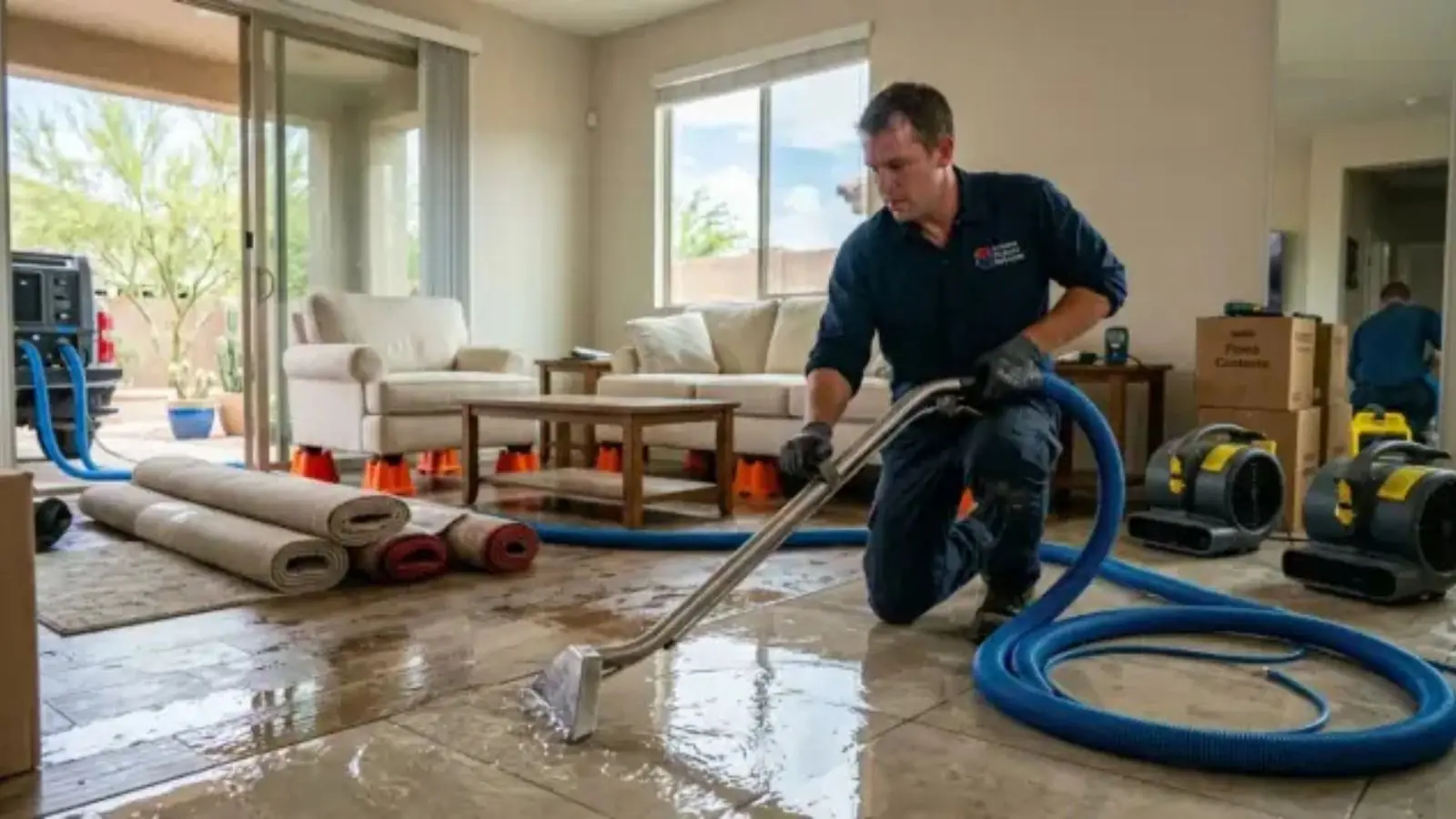
Standing water is an emergency, and an inch on a floor can soak into walls, cabinets and subfloor within hours. Call (760) 769-1159 any time of day, because our line runs 24/7. Before the crew arrives, shut off the water at the main valve, switch off power to wet areas only if you can reach the panel while standing dry, and move people and pets away from the water.
Water removal, also called water extraction, uses pumps and truck-mounted or portable extraction units to pull standing water out of a structure. It is the first step of any serious loss. Drying equipment and repairs come after the water itself is gone, which is covered under water mitigation.
When standing water is an emergency, and what to do while you wait
These are the same steps a dispatcher gives on the phone. Do them only if it is safe, and skip any step that puts you near electricity or contaminated water.
Stop the source
Shut off the main water valve or the fixture valve. A running supply line keeps adding water faster than any pump removes it.
Stay clear of power
If water touches outlets, appliances or the panel, do not wade in. Call the utility or 911 for electrical or gas risk before you call us.
Lift what you can
Raise small furniture onto blocks, pull rugs and move electronics and papers to a dry room.
Keep people out
Keep children and pets away from standing water, especially if it came from a drain, toilet or outdoors.
Take quick photos
Photograph the water line and damaged items before anything is moved. Your insurer will ask for them.
Call the 24/7 line
Give the dispatcher your cross streets, the water source and how deep the water is.
Electrical safety comes first
Never stand in water while touching a switch, outlet or appliance. Cut power at the panel only if the panel is dry and you can reach it without stepping through water. If you smell gas or see sparks, leave and call 911.
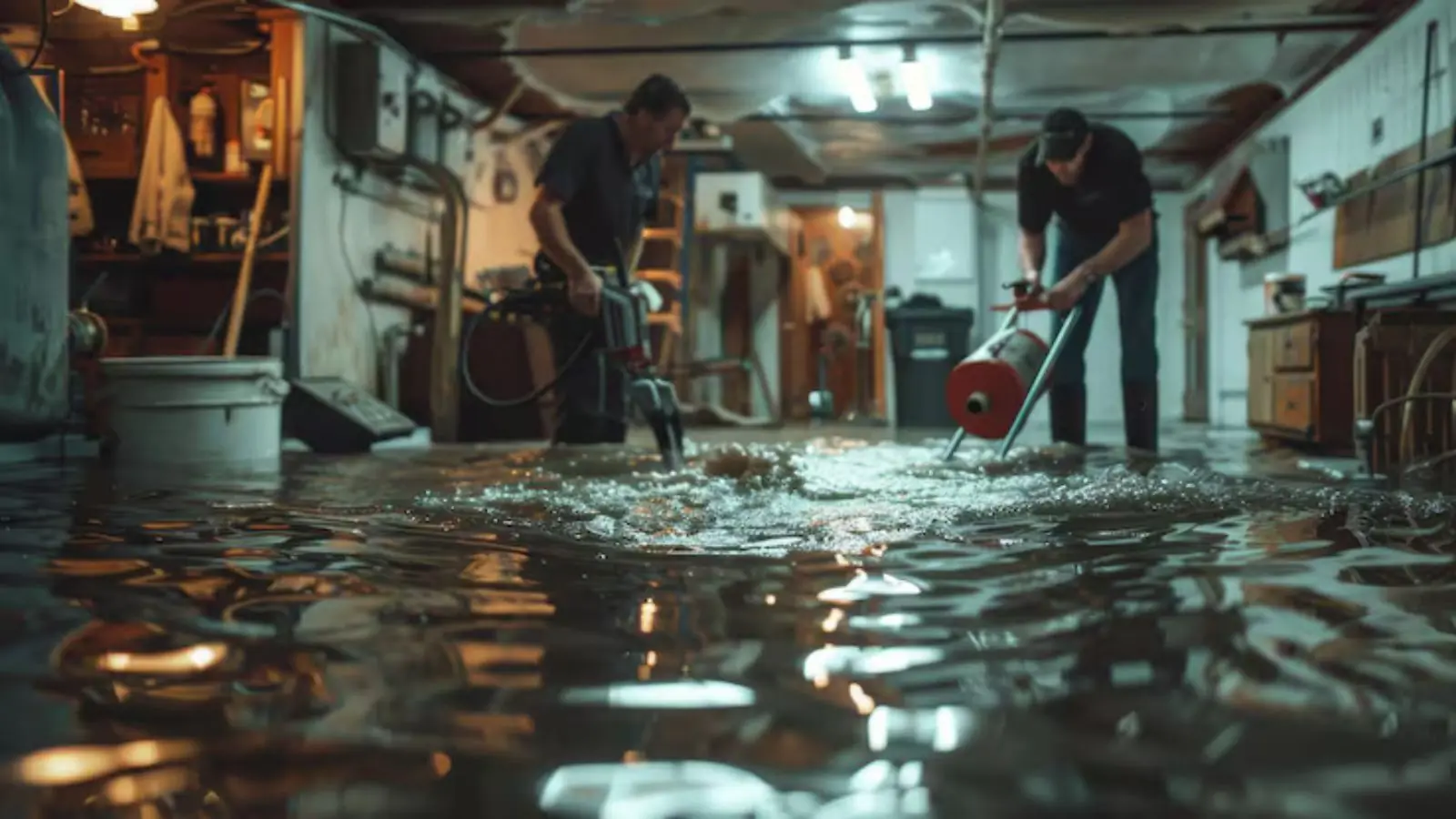
How extraction works in a house, step by step
Crews bring pumps for deep water and extraction units that pull water from carpet, pad and hard floors. A moisture meter then checks what the visible water left behind, because the floor can look dry while the subfloor underneath is not.
Carpet and pad get special attention. If the water was clean and the response was quick, carpet can often be lifted, the pad removed, and the carpet dried in place. When the water was contaminated or sat for days, the pad and sometimes the carpet go to the dumpster.
Extraction ends with a handoff. The crew documents what was removed, sets drying equipment if the structure needs it, and tells you what to watch for over the next day. That written record also helps if you file a claim.
Burst pipe water damage: the first hour matters most
A burst pipe is the classic emergency. Supply lines release gallons a minute, and a break inside a wall can run for hours before anyone sees a stain. In a hot desert climate, pipes in attics and exterior walls are also stressed by heat and age, and a failed fitting can let go with no warning.
Shut off the main valve first, then open a low faucet to drain what remains in the line. Photograph the damage before moving anything. Do not use a household vacuum on standing water, and do not use appliances while the floor is wet.
The crew then finds the break, pumps and extracts, and opens the wall where readings show moisture has traveled. A plumber repairs the pipe itself. We handle the water, drying and the dry-out documentation your insurer will ask about.
Extraction methods compared
| Situation | Equipment | Why it fits |
|---|---|---|
| Inches of water on a hard floor | Pump, then extraction unit | The pump handles volume and the extractor pulls the film left in the grout and boards. |
| Soaked carpet over pad | Extraction unit and pad removal | Pad holds water and dries slowly, so it is usually the first thing out. |
| Water under laminate or hardwood | Floor drying mats and air movers | Mats draw moisture from beneath and may save boards that tearing up would destroy. |
| Water in a crawl space or low area | Submersible pump | A narrow space needs a pump that can sit in the water and move it out. |
If the water came in from outdoors, it is flood damage and the response changes. The flood damage crew handles contaminated floodwater, mud and debris.
What drives the cost of water removal
There is no useful price without seeing the water, so scope and price are explained before work starts. These are the factors.
- Depth and volume more water means more pump time and more extraction passes.
- Water category clean supply line water and contaminated drain water are handled and billed differently.
- Square footage the number of rooms the water reached sets labor and equipment needs.
- Materials pad, carpet, hardwood and drywall each have a different save-or-remove decision.
- Time since the loss water that sat for days has soaked further and needs more removal and drying.
On insurance, sudden and accidental water damage from a burst pipe or failed appliance is often covered, and slow leaks often are not. Flood damage generally needs a separate flood policy. Ask your insurer before you rely on any assumption.
Where we respond
Our crews serve ZIP 92274 in Thermal and the surrounding eastern Coachella Valley. That includes Indio and La Quinta to the west, along with Coachella and Mecca. Most roads in the area run on a grid of farm avenues, so cross streets help the dispatcher route a crew quickly.
If you know where the water came from, tell the dispatcher. A roof leak, an overflowing toilet, a failed water heater and a washing machine hose each call for slightly different first steps.
Questions about water damage in Thermal
Yes. The dispatch line is answered 24/7, including nights, weekends and holidays. A crew is sent same-day when available and the dispatcher talks you through the safe first steps while you wait.
A shop vacuum can handle a small spill, but never use a household vacuum or electrical appliance around standing water. For more than a puddle, call a crew so you are not standing in water near power.
Often, if the water was clean and extraction started quickly. The pad usually has to go, and the carpet is lifted, cleaned and dried in place. Carpet soaked with contaminated water is usually removed.
Crews use drying mats and air movers that pull moisture from beneath the boards. It works best when started early, before the wood cups or the finish lifts.
A supply line break is typically Category 1, a washing machine drain is Category 2, and sewage or floodwater is Category 3. Clean water can move up a category if it sits, so give the dispatcher the source and timing.