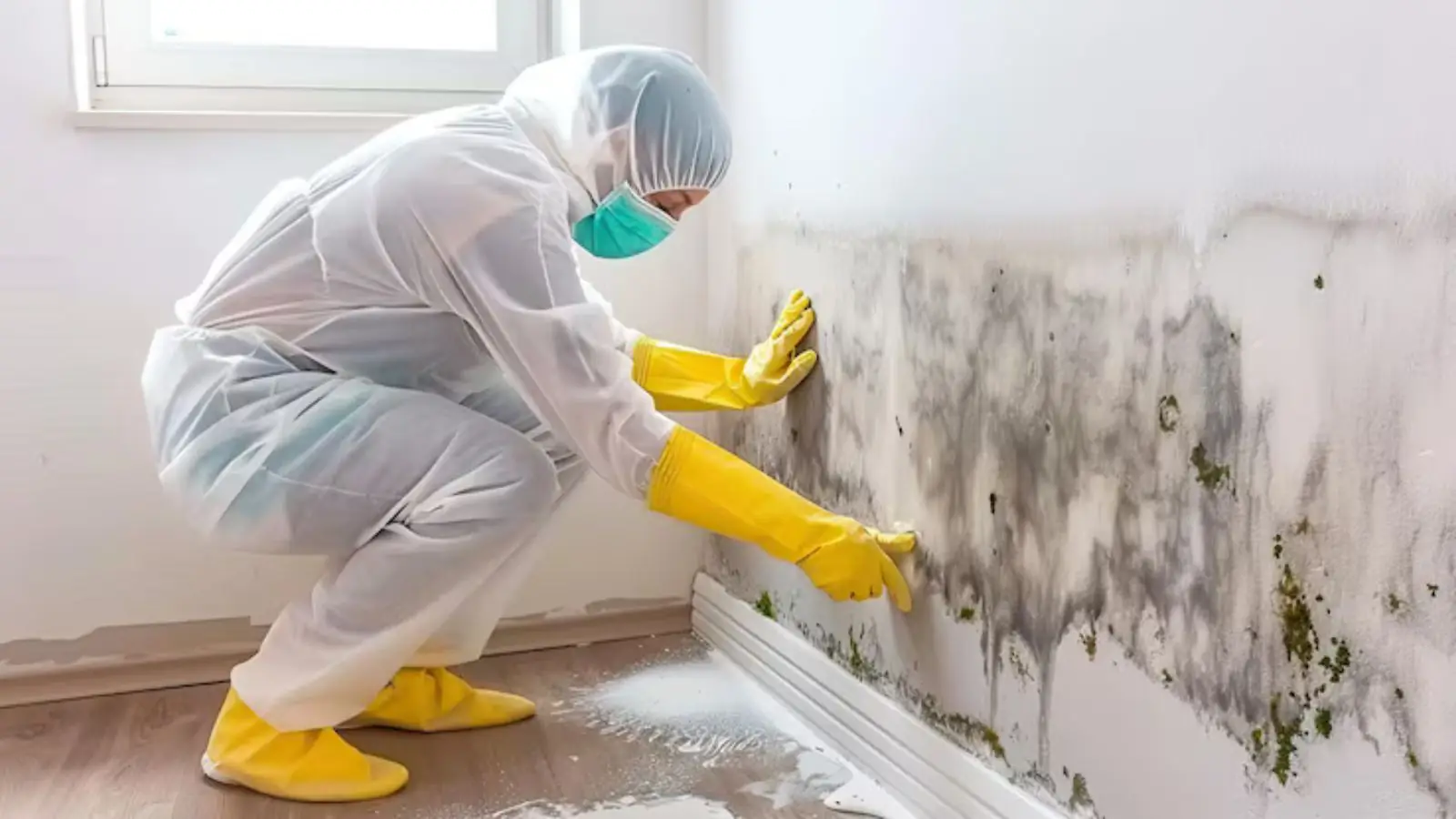
Mold needs moisture, so mold remediation always starts with finding and stopping the water. Call (760) 769-1159 if you see growth after a leak, in a closet, on a ceiling or behind a bathroom wall. The crew assesses the moisture source, contains the area and removes affected material, following the practices in ANSI/IICRC S520, the published standard for mold remediation.
Mold remediation is not the same as a surface cleaning. The goal is to remove contaminated material under containment so spores are not spread through the house, and to dry what remains. It is often the second call after water mitigation, because a wet structure that was not dried in time is where growth starts.
I see spots and smell something musty. Is this mold?
People notice dark or fuzzy spots on a wall corner, a musty smell in a closet, peeling paint above a shower or a wet carpet edge. Those signs mean moisture is present, and mold may be growing in it. A visual check cannot always tell mold from dirt or staining, which is why an inspection or testing step exists.
The first move is to stop the water and keep the area dry. After that, a crew can tell you whether you are looking at something small to clean or something that needs containment and removal. Health questions belong to a physician, not to a restoration crew.
Mold after water damage: how a leak becomes growth
Mold can begin to grow on wet organic material within 24 to 48 hours, per EPA guidance. Drywall paper, wood, carpet and insulation all qualify. The longer a material stays wet, the more likely growth is.
- Hidden leaks a slow leak under a sink, behind a toilet or around a shower keeps a wall damp for weeks.
- Air conditioner condensate a clogged condensate line can overflow into a closet or ceiling, which matters in a place with very hot summers.
- Roof and window leaks water that runs behind finishes reaches framing and insulation before it shows.
- Slow drying water left in carpet, pad or a wall cavity after a spill is a common starting point.
Fixing the water source is step one. Removing mold without fixing the leak only lets it return.
Mold removal and black mold cleanup: what the process looks like
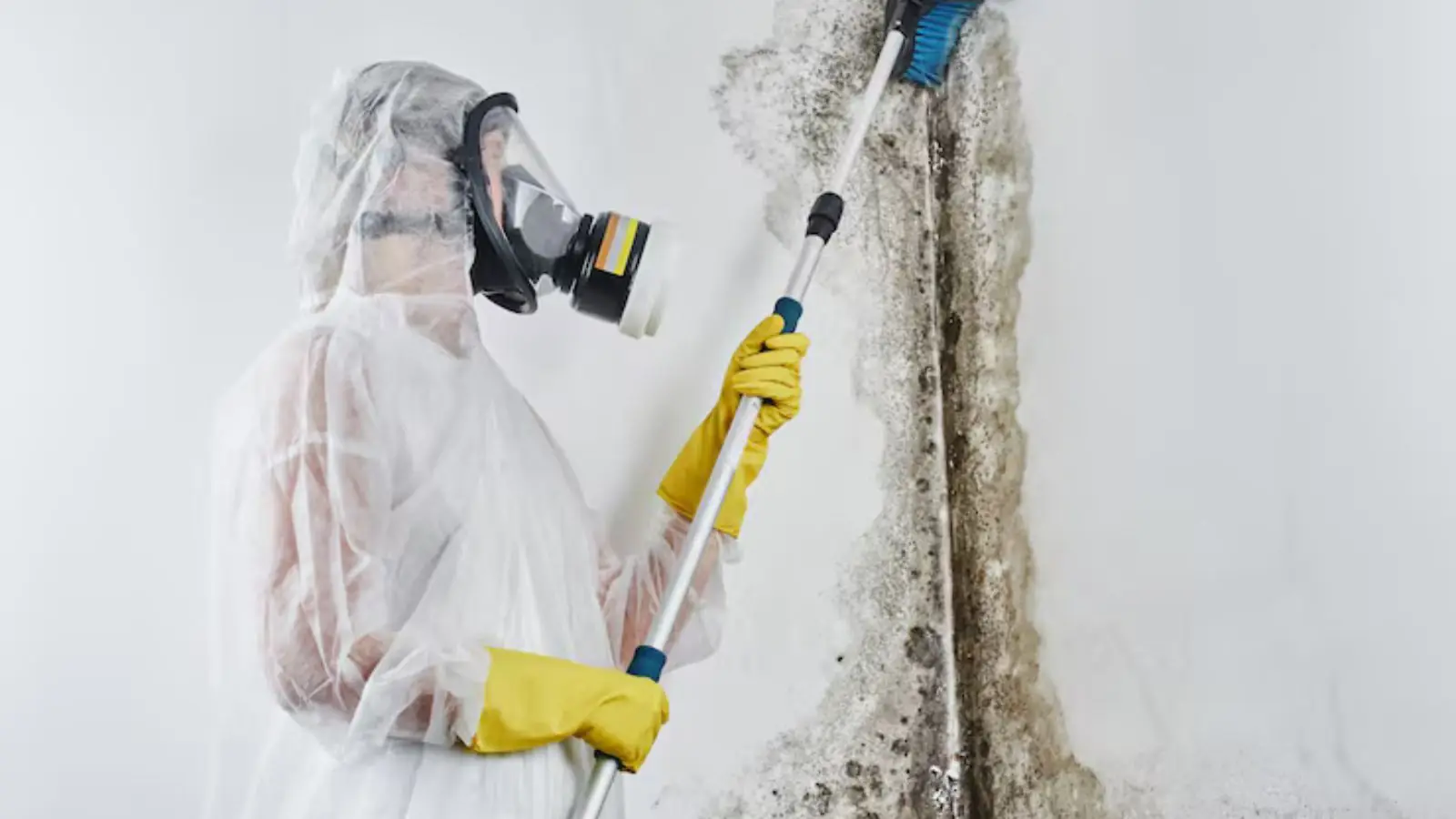
The crew isolates the work area with plastic barriers and sets up negative air with a HEPA air scrubber so spores are pulled out of the room and not spread. Affected drywall, insulation and porous material are cut out and bagged. Framing and other solid material that can be cleaned are cleaned and dried.
Black mold is not removed by a different method than other mold. Color does not decide the plan. What decides it is how far the growth extends and what material it is on. A crew treats any visible growth as a moisture problem first.
At the end, the area is cleaned, dried and documented, and rebuild work such as new drywall can begin. Bleach and paint do not remove mold from porous materials, and painting over it does not stop it.
Mold testing, inspection and clearance
An inspection looks for moisture sources and visible growth. Testing can sample air or surfaces, but results need interpretation, and not every job needs it. Callers often ask whether they can get a mold inspection before they decide, and the answer is that an assessment of the moisture source and the visible growth comes first.
Independent clearance testing is done by a separate party after remediation to check that the area meets the remediation goals. It is common in a home sale or a loan situation. Lenders and buyers set their own rules, so ask them what they require, because nobody can promise how a lender will respond.
| Step | What it answers | Who does it |
|---|---|---|
| Moisture assessment | Where is the water coming from and how wet is the structure? | Remediation or mitigation crew |
| Visual inspection | How far does visible growth extend? | Remediation crew |
| Sampling | Is there airborne or surface growth beyond what is visible? | An inspector or lab |
| Clearance testing | Did remediation meet the goal? | A separate, independent tester |
What decides the cost of mold work
Mold jobs vary the most of any restoration work, so scope and price are explained before work starts. These factors drive it.
- Size of the affected area a closet corner and a whole ceiling are very different projects.
- Material involved mold on framing can be cleaned, while mold on drywall and insulation is usually removed.
- Containment needs larger areas require barriers, negative air and more labor.
- Moisture source an unfixed leak adds a plumbing or roofing step before remediation.
- Rebuild replacing removed drywall, insulation and paint is a separate scope.
Insurance treats mold according to the policy and the cause. Mold that follows a sudden covered leak is sometimes addressed, while mold from long-term moisture often is not. Ask your insurer and keep records of the leak and the repair.
Mold calls across Thermal and the eastern valley
We take mold calls in ZIP 92274 in Thermal and the surrounding area, including Coachella, Mecca and La Quinta. Heavy air conditioner use in summer can mean condensate drains that overflow in a closet or a ceiling above a utility room. Those are common starting points we check first.
After remediation, the repair team rebuilds the removed material so the room is finished, not just cleared.
Questions about water damage in Thermal
Small spots on hard, non-porous surfaces can sometimes be cleaned by a homeowner if the moisture source is fixed. Growth on drywall, carpet or insulation, or any large area, should be handled by a professional.
Bleach may lighten surface stains on hard materials, but it does not remove mold from porous materials like drywall or wood. Removal and moisture control are what solve the problem.
Not always. A moisture assessment and visual inspection often tell you enough to start. Testing is useful when growth is suspected but hidden or when a sale or loan requires documentation.
That depends on moisture. If the source is fixed and the area stays dry, regrowth is much less likely, but nobody can promise it will not return.
Clearance testing is done by an independent party after remediation, which keeps the result credible. Ask your lender or buyer what they require before you plan around it.