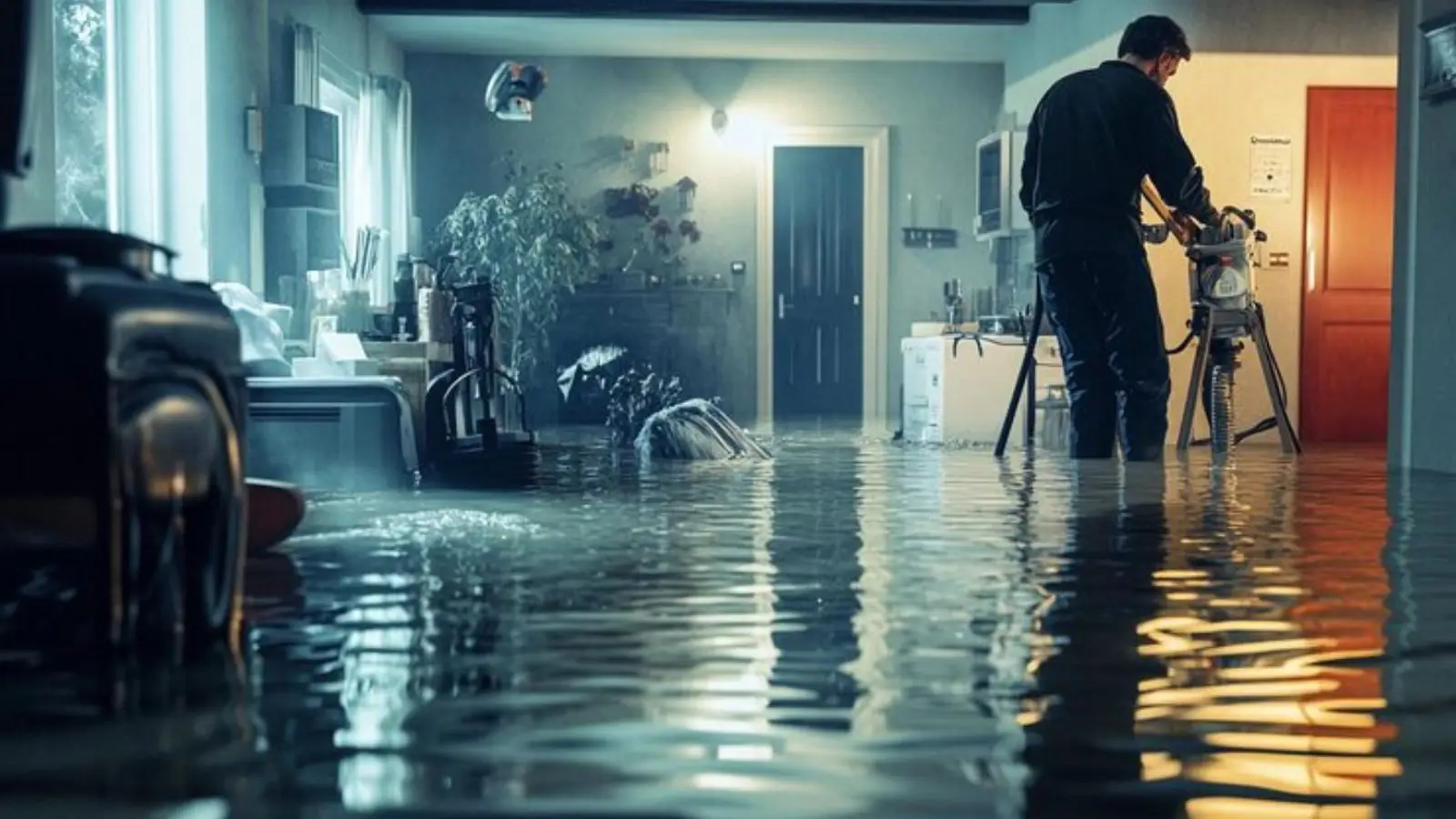
If water is spreading through your Thermal home right now, you are inside the window where fast action matters most. Our line is open 24/7, so call (760) 769-1159 and a dispatcher will walk you through the next steps. While you wait, stop the source if you can, shut off the main water valve, lift valuables off wet floors, and keep people and pets out of any water that may be contaminated.
Water mitigation is the work done in the first one to three days to keep damage from growing. It means finding the source, removing standing water, setting drying equipment, and measuring moisture until building materials return to normal. It is a different job from the repair and rebuild stage, which replaces finished surfaces once everything is dry.
My wall feels cool and soft and the carpet squishes. What is this called?
People rarely search for the trade term when they are standing in a wet room. They search for a damp wall, bubbling paint, a musty smell or carpet that will not dry. All of those point to the same fix, and the trade name for it is water mitigation.
The goal is to get the water out of the building before it turns a small loss into a tear-out job. If you can describe what you see, the dispatcher can tell you whether it needs a crew tonight or can wait for morning.
Why the first 72 hours decide how much gets torn out
Wet drywall wicks water upward, insulation holds it like a sponge, and wood swells as it soaks. Mold can begin to grow on wet organic material within 24 to 48 hours, according to EPA guidance. Every hour of delay widens the area that has to be opened up.
Wall cavities and subfloors are closed spaces, so the dry outdoor air in the Coachella Valley never reaches the wet material inside them. Opening a window does not dry a soaked wall. Moving air across the surface and pulling moisture out of that air with dehumidifiers does.
That is why mitigation crews start with extraction and containment of the wet zone before any rebuilding talk. Anything that can be dried in place stays in place, which keeps the final repair smaller and the claim easier to explain.
How the crew finds and maps the water
Water travels. A pipe burst under a kitchen sink can show up as a stain in the next room, and a roof leak can run down a wall before it reaches the ceiling. Crews trace it with tools instead of guessing.
- Moisture meters read the moisture content of drywall, baseboard, framing and subfloor so wet and dry material are separated by readings, not by looks.
- Thermal imaging camera shows cool, wet areas behind finished surfaces so hidden pockets are found before they are closed up.
- Moisture map records readings room by room on day one, then again each day, so drying progress is documented for you and your insurer.
Structural drying: how wet framing and floors get dry again
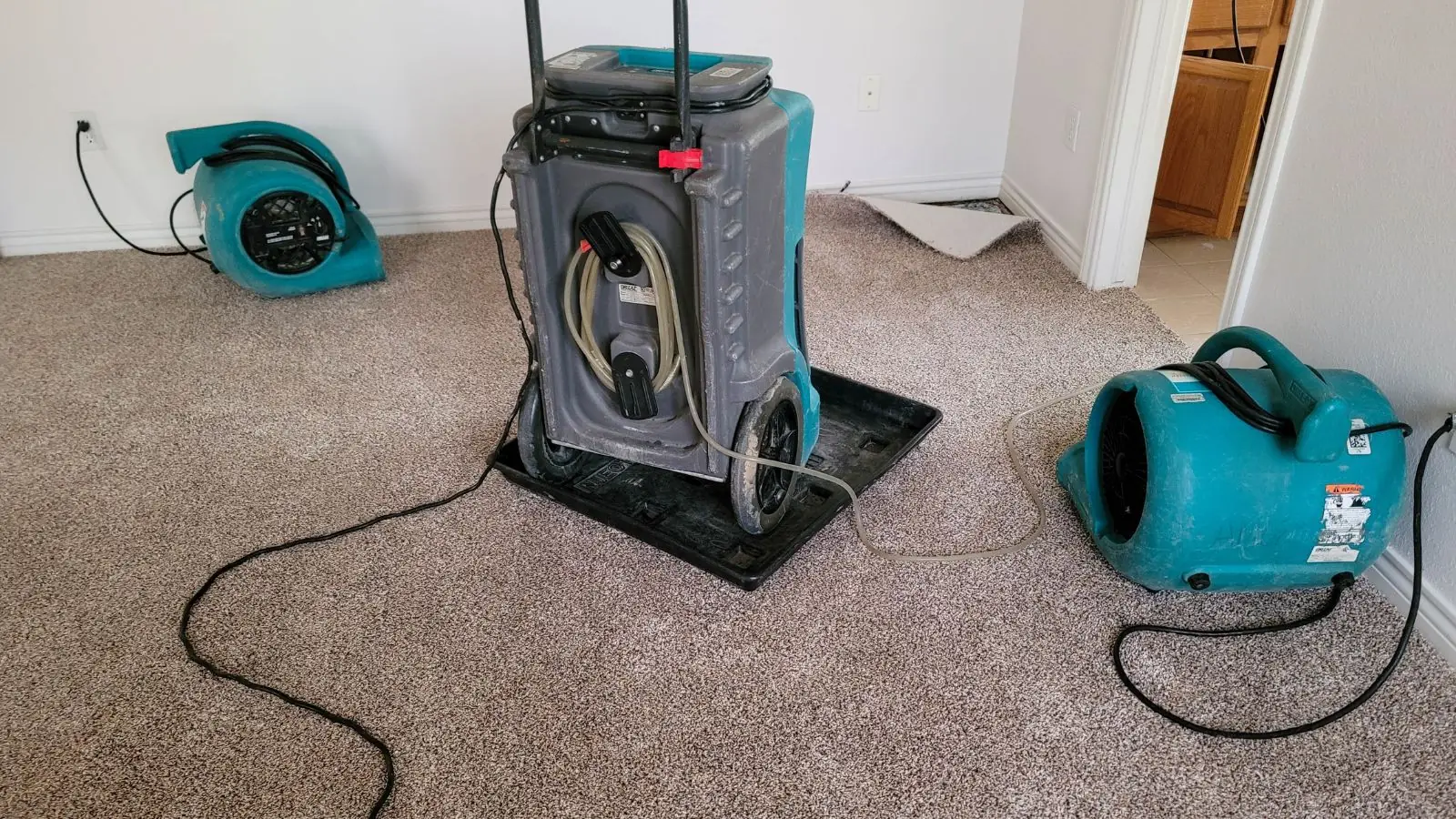
Structural drying is the equipment phase of mitigation. Air movers push dry air across wet surfaces and into wall cavities through small openings. LGR dehumidifiers pull the moisture out of the air so the water has somewhere to go, and drying mats can draw moisture out of a hardwood or laminate floor without tearing it up.
The crew places equipment by reading the moisture map, not by filling every room. Most structures need several days, and the crew returns to check readings each day and remove equipment as areas reach their dry standard. Drying follows the approach described in ANSI/IICRC S500, the published standard for water damage restoration, and you can ask any company whether its crews work to it.
Material that cannot be dried, such as saturated insulation or drywall that stayed wet for days, is cut out and bagged during this phase. Keeping that list short is the real benefit of starting early.
Which kind of water is it? A quick decision guide
The category of water changes what can be saved. The table shows the three categories restoration crews work with and how each one shapes the response.
| Category | Typical source | What mitigation does |
|---|---|---|
| Category 1 | A broken supply line, an overflowing sink, rain through a clean roof leak | Extract, dry in place, and save most materials if started promptly. |
| Category 2 | A washing machine drain, a dishwasher leak, Category 1 water that sat for days | Extract, clean and treat surfaces, and remove porous materials such as carpet pad. |
| Category 3 | Sewage, floodwater carrying soil and runoff, long-standing water with growth | Treat as contaminated. Remove affected porous materials and clean and disinfect what stays. |
Clean water does not stay clean. Time and contact with soil or building materials can move it up a category.
If you are not sure what the water is, treat it as contaminated until a crew says otherwise. For standing water you can see, the emergency water removal crew handles extraction first.
What sets the scope and price
Mitigation is priced on the work the loss needs, and scope and price are explained before work starts. These are the factors that move the number.
- Water category contaminated water means more removal and more cleaning than a clean supply line.
- Area affected the number of rooms and the height the water wicked up the walls decide how much equipment runs.
- Materials involved carpet over pad, hardwood, tile and drywall all dry differently, and some cannot be saved.
- Drying days a bigger or wetter structure keeps equipment running longer and needs more daily readings.
- Access finished basements, tight crawl spaces and built-in cabinets add steps to reach wet material.
Insurance works in general terms like this. Sudden and accidental water damage is often covered, while a slow leak or neglected maintenance often is not, and flood damage is usually excluded unless you carry separate flood coverage. Read your policy or ask your insurer, and ask us for the moisture map and written scope to give them.
Mitigation across Thermal and the eastern valley
Our dispatch covers ZIP 92274 in Thermal and the neighboring communities along State Route 86 and State Route 111, including Coachella to the northwest and Mecca to the southeast. Farm fields surround much of the area, so the drive to an address on a rural road can take longer than a map suggests. Giving the dispatcher the cross streets saves time.
Heavy rain is rare here but it can arrive fast. In 2023, Tropical Storm Hilary pushed local emergencies across the valley, and a shelter opened in Thermal. After a storm like that, ask your water provider and your insurer what applies to your address, and check the FEMA flood map for your property.
Once a structure is dry, the next stage is cleanup and sanitizing where the water was contaminated, followed by repair. Our crews cover each stage so you are not coordinating three companies.
Questions about water damage in Thermal
Yes. The dispatch line is open 24/7, including nights, weekends and holidays. A crew is sent same-day when available, and the dispatcher can tell you what to shut off and lift while you wait.
Most structures need several days of drying, and the exact number depends on the materials and how far the water traveled. The crew takes moisture readings each day and removes equipment as each area reaches its dry standard.
Air movers push dry air across wet surfaces and into wall cavities. Dehumidifiers pull that moisture out of the air so it does not settle back into the structure. Both run together under a plan based on your moisture readings.
Fans and open windows help with surface moisture, but they do not dry a soaked wall cavity or subfloor. Opening the structure and running measured equipment is what gets moisture below the level where mold can grow.
Scope and price are explained before work starts, whatever the hour. Ask the dispatcher how the loss will be scoped when you call.