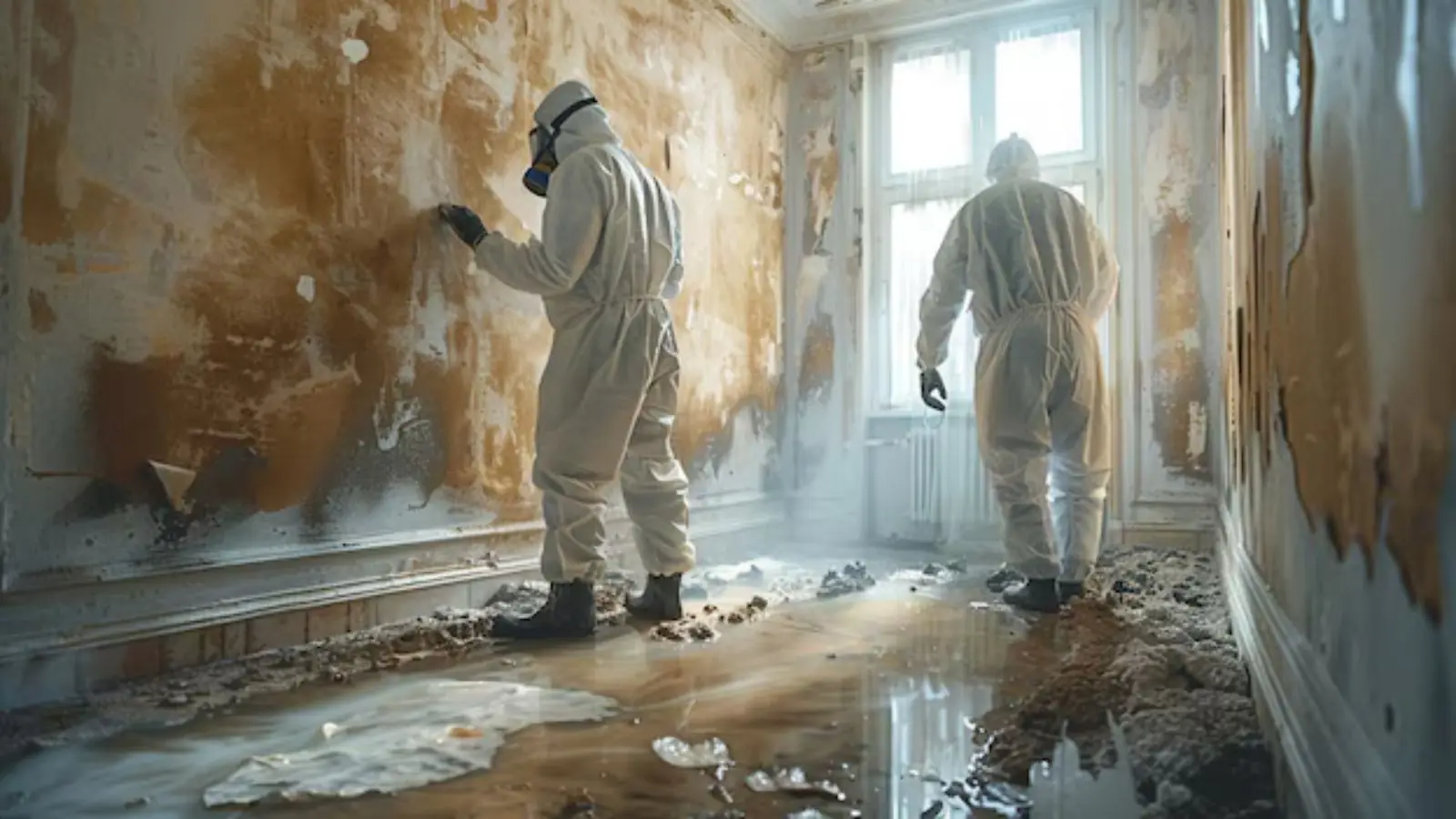
A single patch of mold is usually a symptom. The cause is somewhere nearby, and often out of sight. Getting rid of it for good means looking at the whole house, not one wall.
This plan walks through finding every moisture source, the hidden places people forget, what testing can and cannot tell you, and how a professional job is laid out. If you want help with the repair afterward, water damage repair follows the mold work.
Map the moisture before the mold
Start by walking the house with one question: where could water be getting in? Check ceilings under roofs and bathrooms, wall bases, window sills and the areas around the water heater and AC closet. Note every stain, soft spot, peeling paint and musty corner.
A moisture meter turns that walk into numbers, and a thermal imaging camera shows damp zones behind finished surfaces. Without a map, you may clean one room while a leak feeds another.
Write down what you find and take photos with the date. A simple list of locations, readings and suspected causes helps a professional plan the work and helps with an insurance conversation later.
Do the same walk in the attic or crawl space if you can reach it safely. Wet insulation and dark wood there often explain a stain below.
Hidden places that stay wet
Mold likes spaces where nobody looks. The cabinet under a sink holds supply lines and traps that weep a little at a time. Closets on exterior walls, the back of a vanity, the base of drywall behind a toilet and the AC closet floor are all common.
Window sills collect condensation and sit damp for hours. Crawl spaces, attic edges and the cavity behind a washer hookup round out the list. Check each one with a flashlight and a dry paper towel.
If a cabinet floor is swollen or a baseboard has lifted from the wall, treat that as a sign of past water even if everything feels dry today.
- Under kitchen and bathroom sinks
- Behind and beside cabinets and vanities
- Closets on exterior walls
- Window sills and frames
- AC closets and around the air handler
- Behind washer valves and water heaters
What testing can and cannot do
Testing can show that mold spores are present, and sampling can compare indoor air to outdoor air. It cannot tell you whether a particular home is safe to live in, and it cannot replace finding the water. Anyone with health concerns should ask a physician.
A visual inspection with a moisture meter often tells you more than a test. Testing earns its cost when growth is hidden, a smell has no source, or someone needs a record. Remediation and testing follow ANSI/IICRC S520.
Be careful with home test kits. A dish left on a shelf will catch spores that are always floating around, so a positive result tells you little by itself.
Clearance testing for a sale or loan
After remediation, an independent tester who did not do the work can check the result. This is called clearance testing, and it is often asked for in a home sale or loan. Lenders and buyers set their own rules, so we cannot promise what they will accept.
Ask your lender or agent what they require before you schedule anything. If the house is in the Mecca area, our Mecca team can coordinate the work and the timing with whoever is doing the testing.
Keep the testing report and the remediation records together. Buyers and lenders usually want to see both.
How a professional plan is laid out
The plan starts with locating and stopping the source. Next comes containment with plastic sheeting, then removal of affected material, HEPA air scrubbing and cleaning. Finally, the structure is dried with air movers and LGR dehumidifiers, and readings are taken to confirm dryness.
Scope and price are explained before work starts, and they depend on how much material is affected and where. For the work itself, see our mold remediation page. Ask which licenses cover the work and check them on the CSLB site.
Rooms that were not affected are protected, not opened up. The goal is to remove only what is damaged, so the rebuild is as small as the facts allow.
Keeping the house dry afterward
Fix leaks as soon as they show and wipe wet surfaces. Run bath fans, keep closet doors cracked, and watch the AC condensate line. Check under sinks monthly and after any plumbing work.
No plan can promise mold will never return, but dry materials do not support it. The best defense is catching moisture early. If something starts to smell musty, look at it that week, not next season.
Keep a short log of leaks, repairs and readings. It is useful for you, for an insurer and for a future buyer.
Roads, heat and closed-up homes
State Route 86 and State Route 111 are the main roads through Thermal, and both carry farm freight and trucks toward Interstate 10 in Indio. Tell dispatch which road you are near when you call, so the crew can plan the approach and the equipment around traffic. Same-day response is offered when available.
Summers here bring many days over 110 degrees F, so many homes are shut tight with the AC running for months. Closets and rooms with weak airflow can stay cooler and damp, so check the sills and AC closets first. A walk-through at the end of summer catches what months of closed doors hid. If you live toward La Quinta, our La Quinta crews follow the same plan.
Mold questions from Thermal homeowners
Not always. A visual inspection and moisture readings often show where the problem is. Testing helps when growth is hidden, the source is unclear or a sale needs documentation.
It is a check done by a third party after remediation, not by the crew that did the work. Lenders and buyers set their own rules about it. Ask them what they require.
It depends on how much material is affected and how long drying takes, which is usually several days. Scope and timing are explained before work starts. A small, contained area goes faster than a house-wide job.
Call your water provider for a main line problem, since the name on your water bill tells you which one to call. For anything inside the house, call the restoration line. Cut power only if the panel is dry and safe to reach.