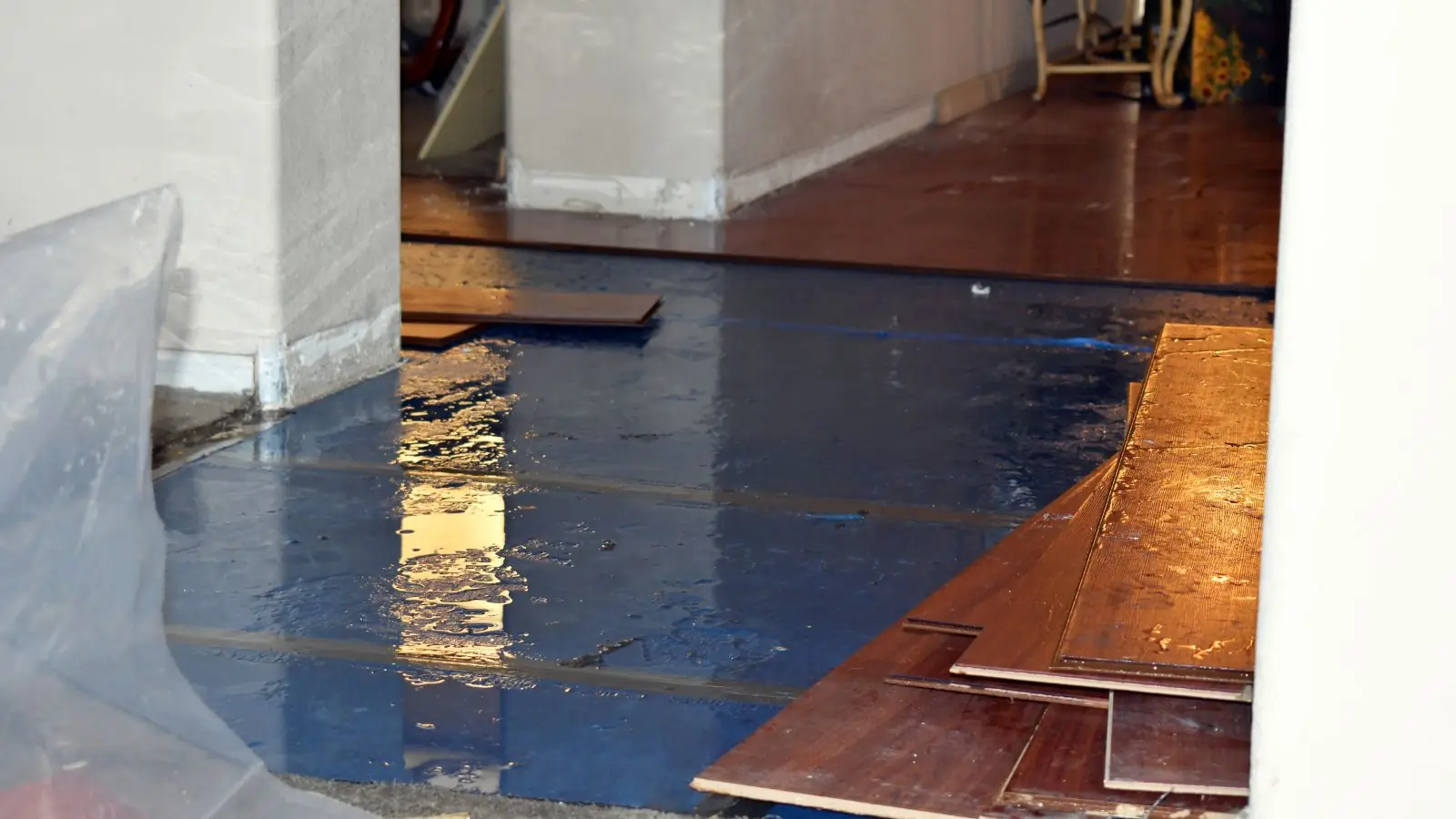
Once the boards and subfloor read dry, the question changes from how to save the floor to what to do with it. There are three real choices: sand and refinish, replace some boards, or replace the whole floor.
The right answer depends on what the floor looks like after drying, not on what it looked like wet. Our water damage repair work starts from the dry readings and the condition of the boards.
Start with the condition after drying
Wait until a moisture meter shows the boards and subfloor are dry, and give the floor time to settle. Cupping often eases as boards equalize, so a floor that looked ruined on day three may look quite different two weeks later.
Then judge it plainly. Look for remaining cupping, gaps, stained or black boards, loose boards, soft spots and a hollow sound underfoot.
Photograph the floor in daylight from a low angle. The camera shows ridges and gaps that the eye misses when standing. Keep those photos with your dry readings, because a contractor and an insurer will both ask for them.
Subfloor and slab condition drives the cost far more than the boards do. That is why the next sections look at the base before the finish. A clean-looking floor over a damp base is the most common repair mistake.
Repair options compared
This table shows the usual match between what you see and what is done. A flooring contractor will confirm after looking at your floor.
If you cannot decide between two rows, ask for both options priced on the same scope. That lets you compare apples to apples. The cheapest line is not always the lowest total.
| Condition after drying | Usual repair | Why |
|---|---|---|
| Light cupping that has flattened, surface intact | Sand and refinish | Removes the minor ridge and evens the finish |
| A few stained, split or permanently cupped boards | Replace those boards and blend | Damage is local, so the rest can stay |
| Widespread cupping, buckling or loose boards | Replace the floor in the affected area | Boards will not lie flat again |
| Black staining or a soft, damaged subfloor | Replace boards and repair subfloor | The base must be sound first |
Subfloor checks come before finish work
A floor is only as good as what is under it. A wet plywood subfloor can swell and soften, and a concrete slab can hold moisture that comes back up through new boards.
Ask for moisture readings on the subfloor, not just the surface. If the subfloor is damaged it must be repaired or replaced before a single board goes back.
Slab floors need a different check from wood subfloors. A moisture test on the concrete before new boards go down is standard practice, and good installers ask for it. Ask whether the work was dried by a crew that logged readings, since professional drying records answer that question.
If the subfloor needs replacing, expect the repair to grow. Ask the contractor to show you the damaged area before it is covered again.
Matching species, width and finish
Oak, maple and other species look different, and a board that is the same species can still differ by cut, width and age. New boards need to be the same species and thickness, and the finish has to blend into the old floor.
Old floors have darkened and the new boards will look lighter at first. Sanding and refinishing the full room usually blends a repair far better than a spot finish.
A refinish also affects what you can match. Prefinished boards come with a factory finish that cannot be matched by a site-applied coat, so a repair in a prefinished floor may show. Ask to see a sample on your own floor before you agree.
Ask the installer to lay a few loose boards on the floor before nailing anything down. Boards from a new carton often differ from boxed to boxed, and a quick look in your own light shows whether the match is acceptable.
How to judge a quote
Ask what is included: board removal, subfloor work, the new material, sanding, stain, coats of finish and cleanup. A quote that lists only a per-room number without a scope is hard to compare. Expect a written scope and a price you understand before any sanding begins.
Ask to see the dry readings that the repair is based on, and ask who is doing the work. Since January 1, 2025, work worth $1,000 or more generally needs a licensed contractor in California, and you can check any license on cslb.ca.gov.
Ask what happens if the floor cups again, and ask what is not included. Do not pay the full price in advance. A clear scope in writing protects both sides, and a contractor who dislikes that request is telling you something.
A good quote also names the species, board width, finish type and number of coats. If it says only hardwood, you cannot tell what you are buying. Compare quotes line by line and ask about any gaps.
Cure time and care after the repair
Finish needs time to cure. Keep furniture and rugs off the floor for the period the installer gives you, and keep the room at a steady temperature.
After the repair, keep humidity steady and wipe up spills. Report any new cupping early, since a floor that has been wet once is easier to wet again. Insurance is separate, so check your policy and ask your insurer about what is covered.
Before you sign off, walk the floor with the installer at different times of day. Low light shows scratches, ridges and sheen differences that midday glare hides. Note anything you want corrected and get it written down.
Seasons and board movement in Thermal
Summers in Thermal run long and hot, and winters are mild. Wood floors in a home that swings between cool air conditioning and dry heat will move, so ask the installer about spacing and acclimation for new boards.
That matters most on a floor that has gaps after drying, since the gaps may tighten up or open further as the seasons change. If you are closer to La Quinta or Indio, our La Quinta crews and Indio team take the same calls.
Repair questions Thermal homeowners ask
Yes, if it has dried and flattened enough. Sanding too soon, before the moisture is gone, can leave crowned boards later. Wait for dry readings.
Replacing a few boards costs less than a full floor, but a patch that does not blend can lead to refinishing the whole room anyway. Ask for both options in writing with the scope of each.
For work worth $1,000 or more, California generally requires a licensed contractor. Check the license on cslb.ca.gov before you sign.
Wood shrinks as it loses moisture to dry air. A floor that swelled and then dried can end up with gaps. Ask your installer whether the gaps will close or need filling.