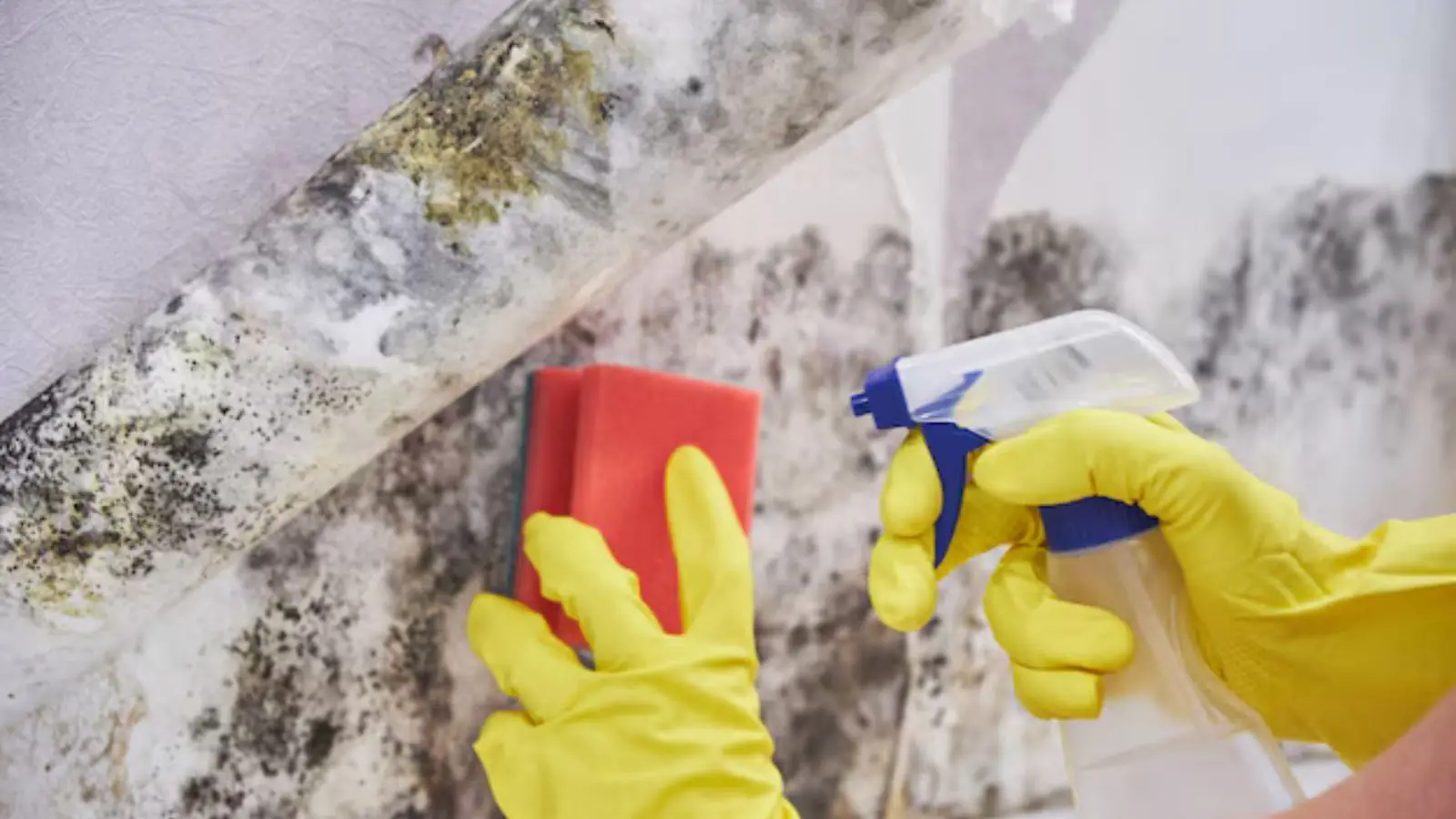
Some mold is a cleaning job. A small patch on a tile grout line, a window frame or a metal shelf can be wiped away by a careful homeowner. What decides it is size, material and whether water is still reaching the spot.
This guide gives you the limits first, then the gear, then the steps. It also lists what never to do and where you stop and call a mold professional. Mold needs moisture, so cleaning without fixing the water source is only a pause.
The line between DIY and a call
Cleaning yourself fits when the growth is small, on a hard non-porous surface, and the moisture source is already fixed and dry. Think tile, glass, sealed metal, plastic or glazed fixtures. A patch you can cover with your hand is a reasonable limit.
Stop if the growth is on drywall, wood, carpet, insulation or ceiling tile, or if it is spread over a wide area. Stop too if you cannot find why it is wet, or if the smell is strong in a closed room.
A plain test helps: if a cloth wipes the spot clean and the surface underneath is hard and dry, you are in DIY territory. If the surface gives, flakes or smells damp, you are not.
Gear to put on first
Wear nitrile or rubber gloves, goggles without vent holes and an N95 respirator. Old clothes that go straight in the wash afterward are a good idea. Open a window if the room has one, and keep the fan off so spores do not drift into the house.
If anyone in your home has health concerns, let someone else do the job or hire it out. Questions about symptoms belong with a physician, not an internet guide.
Keep a trash bag, a spray bottle and a stack of rags ready before you start, so you are not walking through the house with wet cloths. Wash your hands and face when you finish, and launder your clothes separately.
A step-by-step method for small patches
This method suits a small patch on non-porous material only. Work slowly and keep the area damp so growth is not shaken into the air.
Follow the steps in order, and stop if the surface looks bigger or softer than you expected.
Detergent and water is enough for a hard, sealed surface. Skip the cleaner cabinet and the strong fumes.
- Fix and dry the moisture source first, such as a dripping trap or a wet window sill.
- Close the door to the room and cover nearby fabric with plastic.
- Mix dish detergent with warm water in a spray bottle.
- Mist the patch lightly and wipe it with a disposable cloth, moving from clean to dirty.
- Bag the cloth right away and take it outside.
- Wipe again with clean water and dry the surface completely.
- Check the spot daily for a week. If dark growth shows again, call.
What never to do
Never mix bleach with ammonia or with vinegar. The fumes can be dangerous, and cleaners should be used one at a time and rinsed between. Never dry-scrub or sand mold, because that throws spores into the air and spreads them to clean rooms.
Never paint over it, and never run a household fan across it. Painting seals in moisture and growth. Fans scatter what you were trying to contain.
Do not use a pressure washer or a wire brush on grout, and do not let kids or pets in the room. If a cleaner has a strong smell, it is doing more than you need on a small patch.
Fix the moisture or the patch returns
Look for the reason the spot was wet. A shower with poor ventilation, a leaking supply line under a sink, a window sill that collects condensation or a washer hose that weeps can all be the cause. If you find a hidden leak, a water damage repair crew can open and dry the area.
A thermal imaging camera and a moisture meter show where water has gone behind a wall. You cannot see that with the naked eye, and wiping the surface will not help until the water stops.
Give the area several days to dry fully before you decide the job is done. Run the bath fan, open the window and keep the sill clear of plants and towels.
When to stop and call
Call when the growth is on porous material, covers more than a small patch, returns after cleaning or comes with a musty smell you cannot trace. Call too if it is near a water heater, an AC closet, or any wall that feels damp. Testing and remediation follow ANSI/IICRC S520.
If you are closer to Mecca, our Mecca crews cover the same hours. Dispatch is same-day when available, and scope and price are explained before work starts.
Farm-valley moisture and your water bill
Canal-irrigated farming made this area green, and farm fields surround the community. Irrigation and spray near the house can leave outer walls and window sills damp, and condensation forms on cool glass after the AC runs all night. Wipe window sills dry in the morning, and keep sprinkler heads aimed away from siding.
Some Thermal homes were served by small mutual water systems, and a Coachella Valley Water District project connected one of them to its own system because of chromium-6 levels. The name on your water bill tells you which provider to call about a main line problem. A leak inside the house is yours to fix. For leaks in older homes near Indio, our Indio service area is also covered.
Mold questions from Thermal homeowners
Bleach is poor on porous materials, since it does not reach roots below the surface, and it should never be mixed with ammonia or vinegar. On hard non-porous surfaces, detergent and water is usually enough. Always ventilate and wear gloves and goggles.
Testing does not tell you whether a small hard-surface patch is safe to clean. It is more useful when growth is hidden, widespread or tied to a sale. If you are unsure, call and describe what you see. A professional who inspects the area with a moisture meter can tell you more about a hidden source.
A tiny surface mark on firm, dry drywall with the leak fixed may be cleaned with care. If the board is soft, stained through or has been wet, it usually needs to be cut out. When in doubt, have it checked with a moisture meter.
Air conditioners run hard here, so condensation at cold vents, windows and AC closets is common. Check those spots weekly in summer. A damp closet floor is an early warning.