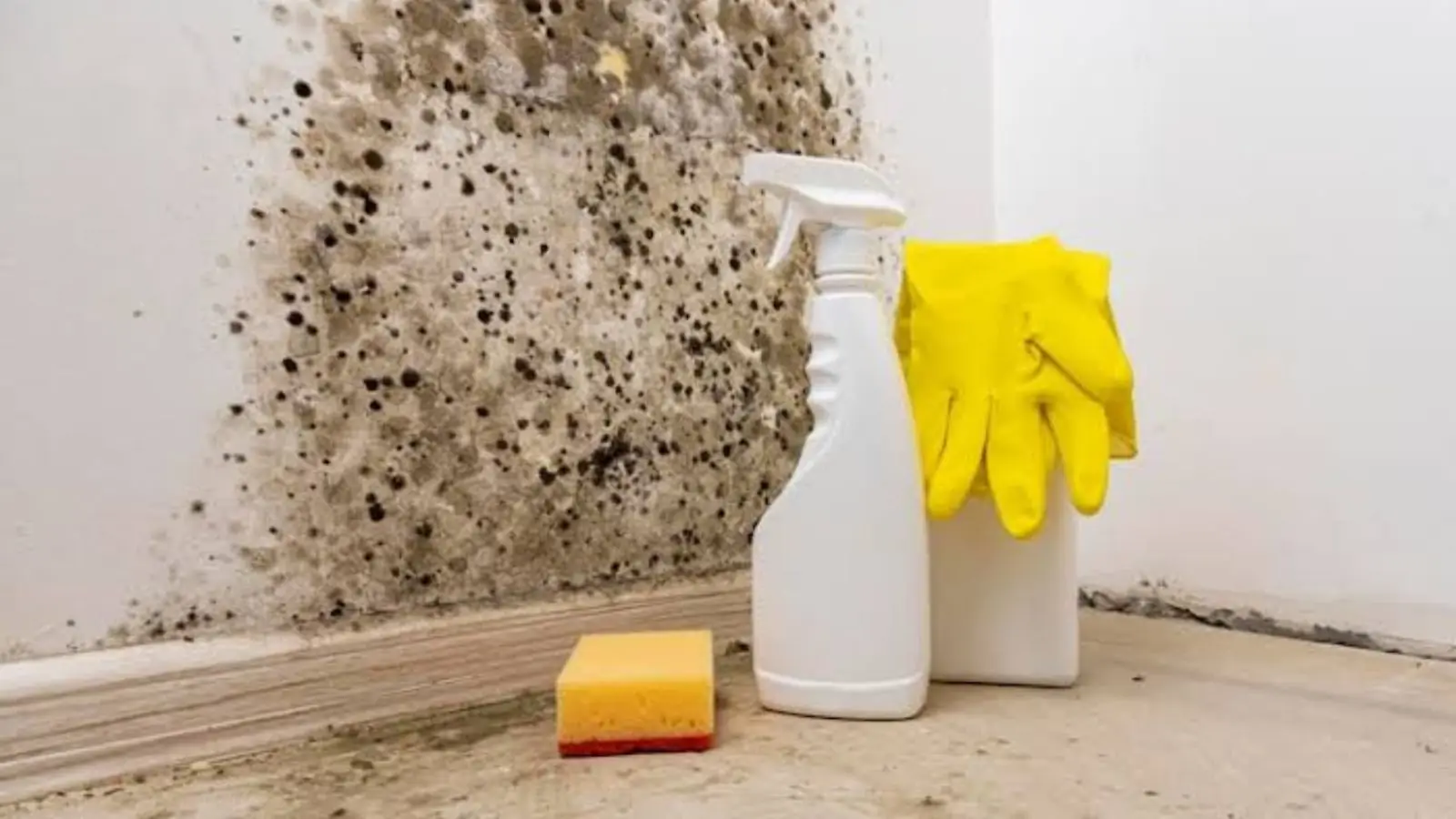
Most homeowners ask the same thing: what kills it? The better question is what removes it, and the answer changes how you spend your weekend. A spray can discolor a patch, but it does not take the growth out of a wall.
Here we compare the usual home methods, explain why dead mold still has to be removed, and describe what restoration crews do instead. Moisture control is the real fix, and water mitigation is where that starts.
Dead mold is still there
Killing a colony and removing it are different jobs. A treated patch can look cleaner while the dead growth stays on the surface and inside the material. Dead and dormant mold still has to come out.
A stain that fades can feel like success. The color goes, but the board, grout or wood still carries what grew on it. Only removal and cleaning take it away.
Think of a dead colony as debris, not as a finished job. Spores and fragments stay on the surface and can be stirred up by sanding, scrubbing or demolition without containment.
Contractors who only spray and leave are selling color, not removal. Ask what material is coming out and how it will be carried away.
Common methods compared
Home products get plenty of credit they have not earned. The table lays out what each method does and where it runs out. None of them fixes a wet wall.
Notice the pattern in the rows. Every method that works on porous material involves taking the material out, and every method that only touches the surface stops at the surface.
| Method | Works on | Limit |
|---|---|---|
| Detergent and water | Hard, non-porous surfaces like tile and glass | Does not reach into wood or drywall |
| Household bleach | Surface color on hard, non-porous material | Does not penetrate porous material, and must never be mixed with ammonia or vinegar |
| White vinegar | Light surface wiping on small hard patches | Weak on porous material, and not a substitute for removal |
| Painting or sealing over | Nothing useful | Traps moisture and hides the problem |
| Cut out and replace material | Drywall, insulation, carpet pad, soft wood | Needs containment and a dry cavity first |
| HEPA vacuum and damp wipe | Hard surfaces and framing after removal | Used after the source is fixed, not instead of it |
Why porous material changes the rules
Mold sends fine threads into drywall paper, wood grain, insulation and carpet backing. A spray stays near the top, while the growth sits underneath. That is why surface treatment is not removal on porous material.
Bleach has a further trap. It is mostly water, and the water can soak into the material and feed the growth later. On a wet board that is the last thing you want.
A rule of thumb helps here. If you could scratch it, soak it or tear it, it is porous. Drywall, ceiling tile, carpet, wood framing that stayed wet and fabric all fit.
What professionals do instead
Work follows ANSI/IICRC S520. Plastic sheeting and negative air seal the work area, then affected drywall, insulation or flooring is cut out and bagged. A HEPA air scrubber runs throughout, and HEPA vacuums finish the surfaces.
Framing that stays is cleaned and dried, and a moisture meter confirms it is dry before anything is rebuilt. If a pipe or roof caused the problem, water damage repair follows once the mold work is done.
Negative air means the work area is kept at slightly lower pressure than the rest of the house, so air moves into it and not out. Crews also wet-wipe and HEPA-vacuum nearby rooms when the job calls for it.
Moisture control is the real fix
Mold needs moisture to grow, and it stops spreading when the material is dry. The job is to find the source, fix it and dry the structure with air movers and LGR dehumidifiers. Until that happens, anything you remove can grow back.
No product can promise growth will never return, and any contractor who says so is overselling. What you can do is remove the damp, ventilate and watch the spot. Ask your restoration team how and when they will check dryness.
That is also why the drying plan matters more than the cleaning product. Ask how many air movers and dehumidifiers will run, how long, and how readings will be recorded.
Checking that the job is done
A good finish looks like dry readings, clean surfaces and no leftover odor. Independent clearance testing is available if you want a third party to check the result, and lenders and buyers set their own rules about it. Nobody can promise a particular outcome on a loan or sale.
Homeowners in La Quinta should do the same. Ask for the plan in writing. Before you sign anything, look up the contractor's license on the CSLB site. Scope and price should be explained before work starts.
Keep the paperwork from the job, including moisture readings and photos of the removed areas. These records help with a sale, a rental or an insurance conversation. Check your policy, since gradual leaks are often excluded.
Heat, dry crusts and sweating glass
Thermal summers bring many days over 110 degrees F, and dry heat makes some surfaces look finished. A patch that dries to a pale crust in a hot garage or sunroom may seem dead. It is not removed, so treat any dried mold the same as damp mold and do not brush it.
The AC cycles all summer, and cold vents, windows and closet walls can sweat as a result. Check those spots weekly, and call when a stain returns after cleaning. If you are near Coachella, our Coachella crews cover the same hours.
Mold questions from Thermal homeowners
Vinegar may lighten a surface mark, but it does not remove growth from porous drywall. The board has to be dried, and wet or stained board usually has to be cut out. Do not mix it with bleach.
Do not touch or brush it. Dry mold breaks apart and sends fine particles into the air. Any health concern belongs with a physician, and larger areas should be left to professionals.
Fogging and ozone may change the smell, but neither removes growth from a wall. Remediation under ANSI/IICRC S520 is based on removal, containment and moisture control.
Because it only needs a damp spot. A leaking AC line, a sweating cold window or a sink trap in a closet can all hold enough water. The outdoor air being dry does not help a wet wall cavity.