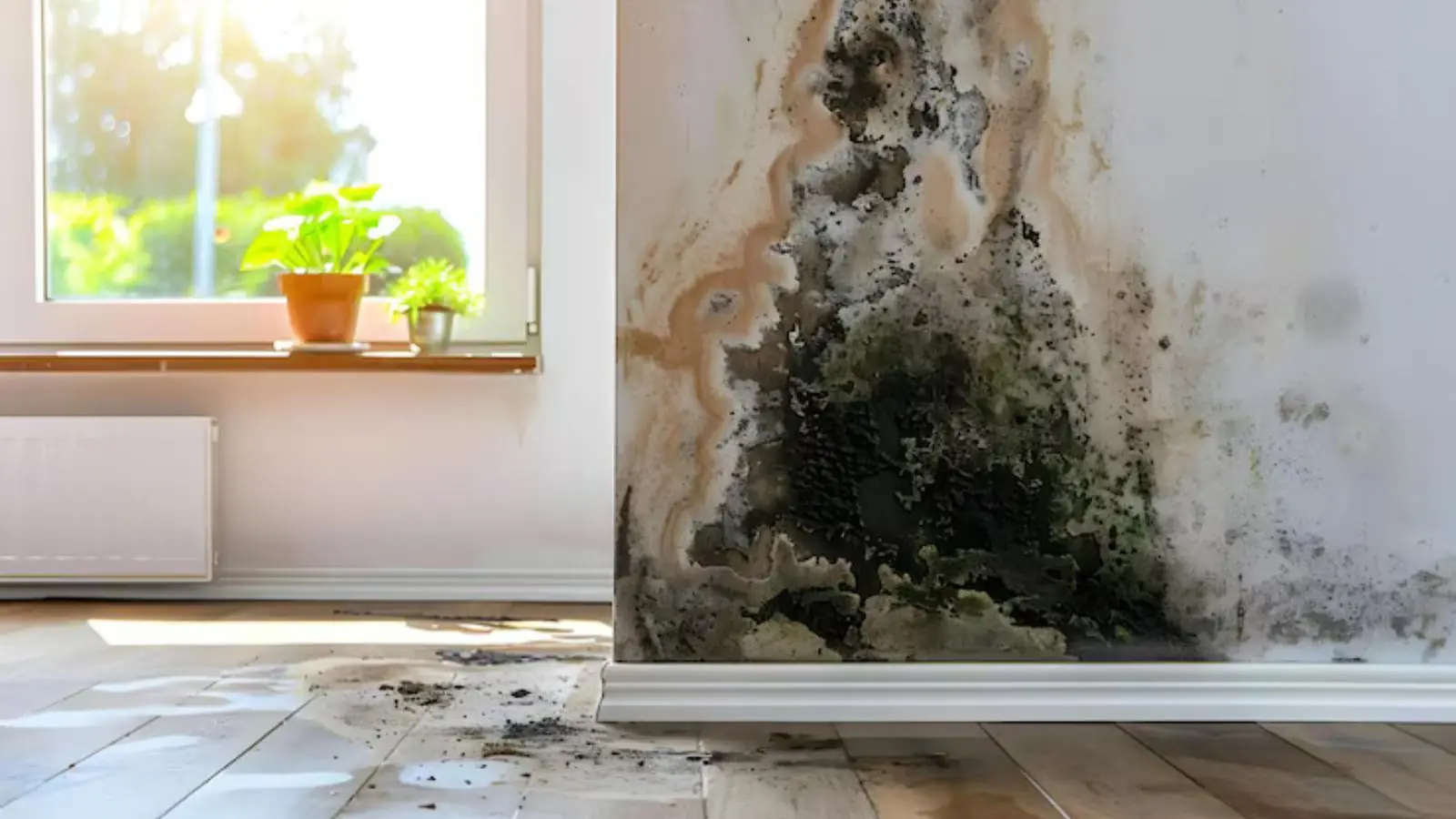
Many homes put the air handler in a hall closet or utility room. When the condensate line clogs, the drain pan fills and spills, and the water goes into the closet floor and the wall behind it. Nobody sees it because the door stays shut.
The first clue is usually a musty smell, a soft baseboard or carpet that feels damp at the closet edge. At that point you have two jobs: an AC technician for the equipment, and water mitigation for the drying.
Why the line clogs and the pan overflows
As the system cools, it pulls moisture out of the air and sends it down a drain line. Algae, slime and dust build up in that line until it narrows or blocks. Then the water backs up into the drain pan, and the pan runs over.
Some systems also have a float switch that is meant to shut the unit off when the pan fills. If it is missing, failed or wired wrong, the unit keeps running and keeps adding water. A slow drip over weeks does as much harm as a single big spill.
The smell is the early warning. A closet that smells like damp cardboard, even though the house is dry, is telling you water is going somewhere. Open the door, look at the pan and feel the baseboard.
What to shut off first
Turn the thermostat to off so the system stops making more condensate. If the pan is overflowing or water is coming out of the unit, switch off its breaker, but only if the panel is dry and safe to reach. If water is near outlets or the panel, stay away and call the utility or 911 before you call us.
Then sop up standing water with towels or a wet vac, and move boxes and clothes out of the closet. Do not run the AC to cool the house while the pan is full.
Take a photo of the pan, the line and the wet area before you clean up. Those pictures help the AC technician, the drying crew and your insurer see the same thing. Then call the right people in the right order.
The wall behind the closet
Water from a pan does not stay on the closet floor. It wicks into the drywall, soaks the baseboard and the bottom plate, and can travel under the flooring into the next room. The wall behind the unit may be wet even when the closet side looks fine.
A moisture meter and a thermal imaging camera find the edges of the wet area. If the drywall has been wet for days, parts of it usually need to come out, and wet insulation goes with it.
Stored items hide the problem for a long time. Shoe boxes, vacuum bags and old paperwork soak up water and become a food source. Take them out, check each for damp and discard what is soaked and not worth keeping.
Carpet, baseboard and flooring
Carpet near the closet door often takes the first hit. Clean water on carpet can sometimes be extracted and dried in place, but the pad underneath is another matter, and it frequently has to be lifted and replaced.
Baseboard is cheap to replace and slow to dry, so it is usually pulled to let the wall cavity breathe. Wood flooring or laminate that has been wet at the edges may swell and need a closer look.
If the closet is on a slab, water can go under the baseboard and sit between the slab and the floor covering. That area stays damp the longest, so it is the last place to read dry. Do not close up the closet until it does.
Who fixes the AC and who handles the drying
An HVAC technician clears the condensate line, checks the pan, tests the float switch and fixes the equipment. That is their work, not ours. We do not repair air conditioners.
We extract the water, set air movers and LGR dehumidifiers, and cut out what cannot be saved. If growth has formed, mold remediation follows ANSI/IICRC S520, with containment and a HEPA air scrubber. Questions about exposure and symptoms belong with your physician.
Tell both companies what the other is doing. The technician needs access to the unit, and the drying crew needs the closet open. A short call between them avoids a day of waiting and a second leak.
Keeping the closet from doing this again
Ask your AC technician about a clean-out on the drain line, a secondary pan and a float switch. Check the line on a regular schedule and look into the closet each month during the cooling season.
No one can promise a leak will never repeat, but a switch that kills the unit when the pan fills turns a flood into a nuisance. Keep stored items off the floor so a small leak is noticed sooner.
A wet-dry vacuum and a pan of fresh water poured slowly into the drain tell you whether the line is flowing. If it backs up, the line is still blocked. Leave the fix to the AC technician.
Summer cooling load in Thermal
Thermal has very hot summers with many days over 110 degrees F, so air conditioners run almost nonstop for months. More run time means more condensate, so a line that is partly clogged in May can overflow by July. Have the drain line cleaned before summer starts.
Winters are mild and rain is rare, so a damp closet wall in a dry month points to the AC, a plumbing line or an irrigation leak rather than weather. If you are nearer Indio, the Indio crews cover the same hours, and our La Quinta team takes calls from the west side of the valley.
Mold questions from Thermal homeowners
Not always. A roof leak, a water heater or a plumbing line can wet the same closet. A moisture meter helps trace the real source before anything is repaired.
Bleach adds water and does not dry the wall. Removal and drying are the proper steps, and the S520 standard sets out how remediation is done. Keep photos for your insurer and ask your physician about any exposure concerns.
Sudden and accidental damage is often covered, while a slow leak that went unnoticed for weeks often is not. Check your policy and ask your insurer before you start repairs.
The coil pulls moisture out of indoor air whenever the system runs, and indoor air is damper than the outdoor air in summer. In a house that runs cooling for months, that adds up to a lot of water in the drain line.