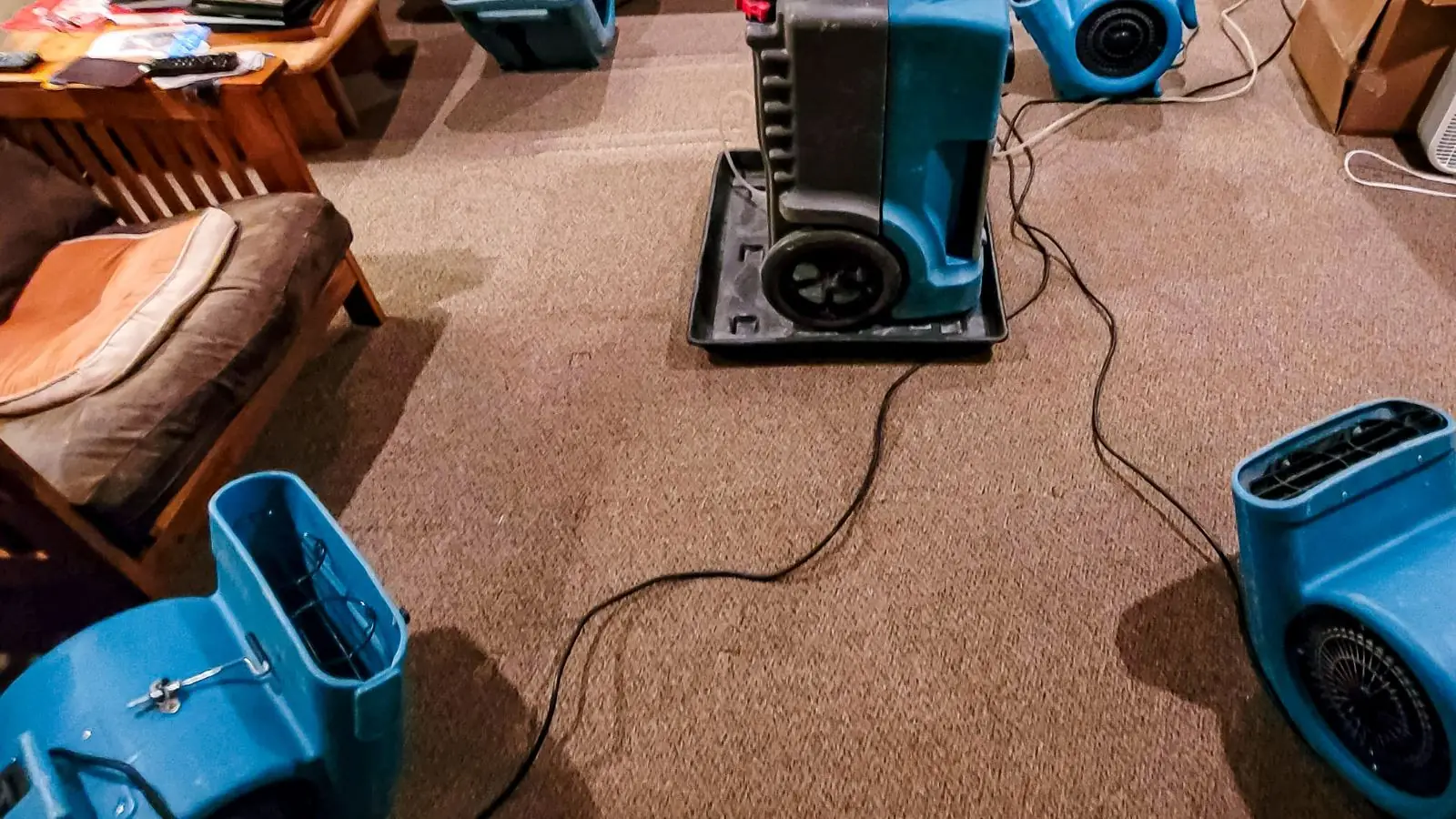
Carpet soaks up water fast and lets go of it slowly. Mold can start growing within 24 to 48 hours on wet organic material, according to EPA guidance, and carpet fibers, backing and pad all qualify. So the first two days after a leak or flood decide how much of your floor survives.
This post explains what to do inside that window, how to tell salvageable carpet from carpet that has to go, and why the pad and subfloor matter as much as the surface. If a water event just happened, call water damage cleanup first and read the rest while help is on the way.
The first 48 hours
Speed is the whole story. Water should be extracted from the carpet and pad as soon as it is safe to enter, and air movers and LGR dehumidifiers should start running right after. Every hour the carpet stays saturated makes mold more likely.
Before you step into a flooded room, check where the water came from. If it touched outlets or came up from a drain, stay out, cut power only if the panel is dry and safe to reach, and call the utility or 911 for any electrical risk before calling the restoration line.
While you wait, lift furniture legs off the carpet and set aluminum foil or blocks under them. Remove wet rugs and loose items, and do not run a household vacuum over soaked carpet.
Clean water versus dirty water
A supply line break or a tub overflow starts as Category 1 clean water. Left on carpet, it picks up soil, bacteria and mold food and turns into Category 2 or 3 with time and contact. Sewage or floodwater is contaminated from the start.
This sorting decides the answer. Carpet hit by clean water and dried fast can often be saved. Carpet that sat in contaminated water is normally removed and discarded, no matter how good it looks once it dries.
Carpet that can be saved
Carpet can often stay when the water was clean, the room was caught early and the pad can be dried or replaced under it. Technicians lift a corner, pull the carpet back from the tack strip, and dry the pad and subfloor while the carpet is held up on air movers.
This is called floating the carpet. It works best on newer, well-bonded carpet that has not stretched. If it ripples, smells musty or shows spots on the backing, saving it is a long shot.
Ask the crew to show you the moisture readings on the backing and the floor before you agree to keep it. If the numbers stay high after drying, replacing it is the cleaner choice than chasing the problem for weeks.
- Caught within a day or two
- Clean-water source such as a supply line or appliance
- No dark spots or musty smell on the backing
- Pad that can be replaced under it
The pad is the weak link
Carpet pad is foam or rebonded scrap, and it holds water like a sponge. It is hard to dry in place, and it is cheap compared with the carpet above it. For that reason pad is usually removed and replaced even when the carpet survives.
If the pad has already gone dark, crumbles or smells sour, replacement is not optional. Leaving wet pad under dry-looking carpet is one of the most common ways a hidden mold problem starts.
Tack strip, subfloor and what lies below
Tack strip is wood, and it soaks up water along the walls. Subfloor can be wood or concrete, and each needs its own drying plan. A moisture meter checks both, and a thermal imaging camera shows damp zones under the surface.
Concrete slabs hold moisture for a surprisingly long time. Wood subfloor that stays wet can swell and grow mold on the underside. Do not lay new pad until readings are dry, or the new floor will cover the problem.
If the floor was glued, stapled or nailed down, the adhesive and fasteners can trap moisture. Crews often pull a strip along one wall to look at the edge of the pad and the base of the drywall.
When mold is already showing
Dark or fuzzy growth on the carpet back or pad means the window has closed. Mold remediation follows ANSI/IICRC S520, so the affected carpet and pad are cut out, bagged and removed, and the area is cleaned with a HEPA air scrubber running. See our mold remediation service for how that is handled.
A tiny spot on a hard subfloor edge, with the source fixed, is a cleaning job. Larger growth, or growth across a room, needs a professional. Health questions belong with a physician.
Keep children and pets out of the room while it is open. Seal the doorway with plastic if you can, and do not move wet carpet through the house, since that spreads debris to dry rooms.
Storm years and ground-level carpet in Thermal
Tropical Storm Hilary in 2023 is a reminder that heavy rain does reach the low desert. That year a shelter opened at Desert Mirage High School in Thermal. Rooms with carpet at ground level are the first to take on water in a storm like that, so after any heavy rain, pull back a carpet corner at the exterior doors and check the pad.
Thermal sits on land below sea level, so check low corners and door thresholds after a storm. Move rugs and furniture legs off wet carpet, and call the same day if the floor still feels damp the next morning. Our Indio crews and La Quinta crews work the same hours when storms hit the whole valley at once.
Mold questions from Thermal homeowners
Household fans move some air, but they do not pull moisture out of the pad or subfloor. The surface may feel dry while the layers below stay wet. Air movers with dehumidifiers and a moisture meter do the job properly.
Mold can begin within 24 to 48 hours on wet organic material. It may not be visible for several days, and a musty smell is often the first sign. Do not wait for it to appear.
Sudden and accidental water damage is often covered, but flood is usually excluded and needs a separate flood policy. Check your policy and ask your insurer, and photograph everything before it is removed.
Yes. Rain or runoff that enters from outside is usually treated as dirty water, so carpet and pad are more likely to be removed. Also check your policy, since flood coverage is separate.