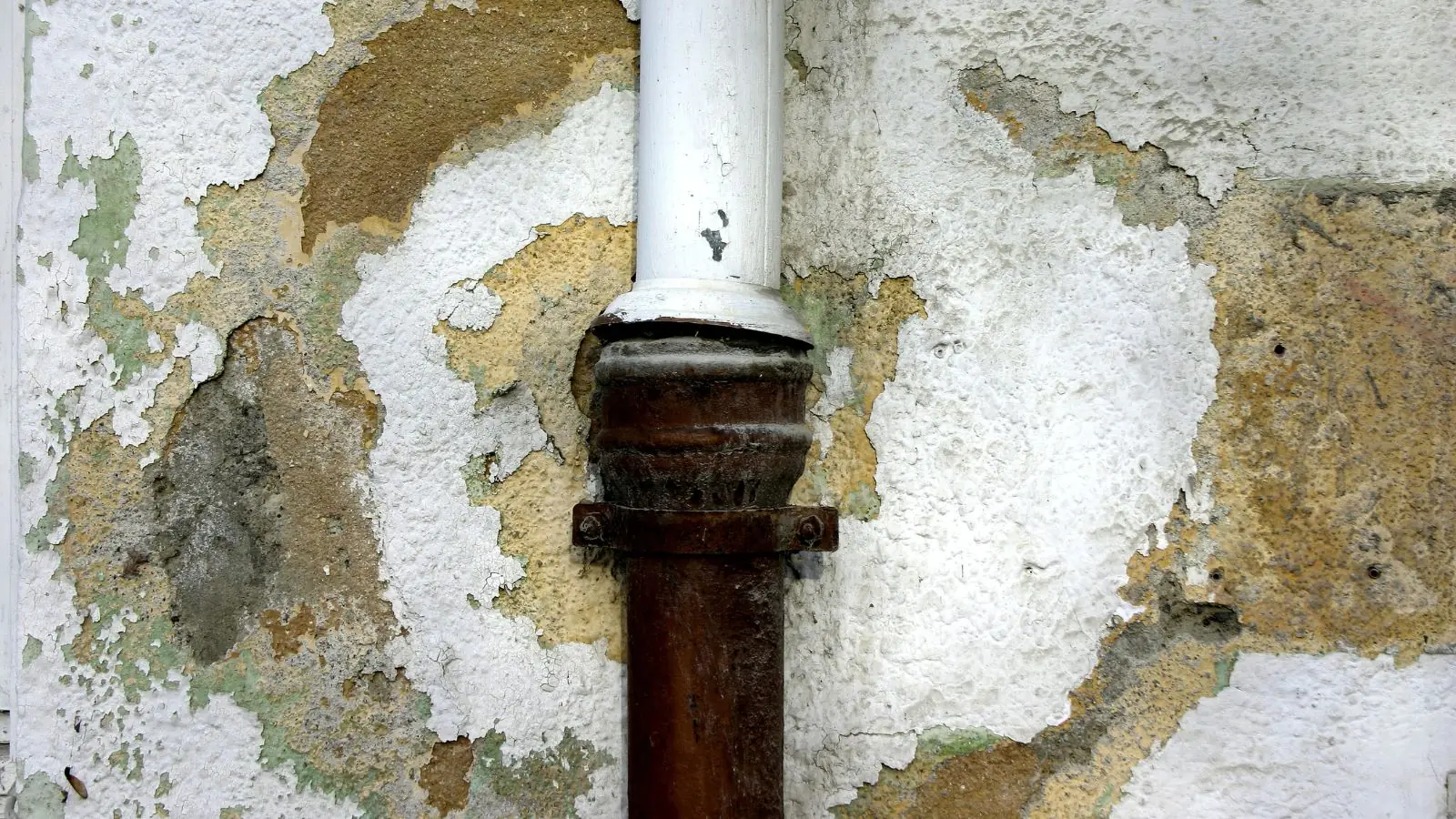
Water in a wall rarely stays where you see the stain. It runs down inside the cavity, soaks the insulation, climbs the drywall by wicking, and settles along the bottom plate. A brown ring on the paint is often the smallest part of the wet area.
Good repair is mostly about order. Stop the water, find the full wet area, dry it, and only then close the wall. Our Mecca-area crews and the rest of the team follow that sequence on every wall job.
How far the wet reaches
Drywall pulls water upward past the visible line, often several inches. Fiberglass insulation holds water and presses against the board, so it keeps the wall wet from the inside. Baseboard, the bottom plate and the lower studs soak up water from the floor.
A moisture meter and a thermal imaging camera show the real edge of the damage without opening the whole wall. Wet areas show as cool patches on the camera, and the meter confirms them with numbers. Mark the edge before anyone cuts.
Hidden damage matters because paint and texture cover it. A wall that looks fine can still be soaked behind the baseboard, and that is where growth starts first. Press the wall low down and look for soft board, a bubbling surface or a musty smell.
Where the cut goes
Crews commonly cut the drywall higher than the visible stain, so the cut edge lands in dry material. A flood cut is a horizontal cut made above the wet line, and higher again when wicking has climbed further. Cuts line up with stud centers so new board has something to screw into.
Wet insulation comes out. Studs are left in place and dried, and the cavity is opened enough for air to move through it. Leaving the wall closed while it is wet is how a small leak turns into a mold job.
Not every wall gets the same cut. A short, quickly dried event may only need the lower strip removed, while a long leak from above can open a full wall. The meter and the camera decide, not the size of the stain.
Dry before you close
Air movers push air across the open cavity and LGR dehumidifiers pull moisture out of the room. Drying usually takes several days, and the meter, not the calendar, decides when it is done. Studs and the bottom plate should read dry before anything goes back.
In summer the outdoor air here is hot and dry, but a closed house running air conditioning is a different environment. Equipment still has to be set up and checked, and the house should not be left to dry on its own.
A wall that is rebuilt over damp framing is a callback waiting to happen. Paint will blister, tape will lift, and a musty smell can return. Waiting an extra day for a dry reading costs far less than doing the wall twice, and our water mitigation work is built around that check.
Damage levels and typical repairs
This table is a general guide. Your wall may sit between two rows, and the meter readings decide.
Read the table by the meter, not the stain. A small brown mark can hide a saturated cavity, and a large mark can be a dry old stain. Ask for the readings behind whichever row your crew puts you in.
| Damage level | Typical repair | Dry first? |
|---|---|---|
| Stain only, wall dry on the meter | Prime with stain blocker, repaint | Confirm dry, then paint |
| Damp lower drywall, short exposure | Cut out wet section, replace board, finish | Yes, dry cavity and studs |
| Saturated board and wet insulation | Remove board and insulation, replace both | Yes, several days of drying |
| Long-term leak, softened or growth present | Remove material, address growth, rebuild | Yes, and fix the source first |
Drywall, texture and paint
New board is taped, mudded and sanded, and then texture is matched to the old wall. Texture is the hard part. Knockdown, orange peel and skip trowel each look different, and a patch that does not match shows in raking light.
Prime the new area before painting, because bare joint compound drinks paint and shows as a dull patch. For a good color match, paint the whole wall corner to corner instead of spot painting. The paint you chose five years ago has faded, so a small touch-up rarely blends.
Electrical boxes, outlets and switches in a wet wall need attention too. A licensed electrician should look at any device that was in standing water before it is used again. Do not trust a device just because it still works.
Permits and licensed work
Since January 1, 2025, work worth $1,000 or more generally needs a licensed contractor in California, up from the old $500 threshold. You can check any license on the California Contractors State License Board website at cslb.ca.gov. A large wall repair, or several walls together, can pass that line quickly.
Permits come from the building department that covers your address. Plumbing, electrical or structural work usually calls for one, and a stain and paint job usually does not. We handle water damage repair with licensed and insured restoration professionals, and we explain scope and price before work starts.
If your wall repair is part of an insurance claim, keep your photos, moisture logs and receipts together. Your insurer may want to see the damage before it is opened, so ask first and then cut.
Which office handles your permit
Unincorporated Thermal and Mecca fall under Riverside County Building and Safety for permits. If you live in unincorporated Thermal, that is the office to ask, and keep your permit paperwork with your repair records.
Cities such as Coachella, Indio and La Quinta run their own building departments, so the rule is to ask the building department that covers your address. A home just over a city line may follow different rules from a neighbor. If you are closer to La Quinta, our La Quinta team covers the same hours.
Repair questions Thermal homeowners ask
Small dry patches are a reasonable homeowner job. If the wall was wet, get the moisture readings first, because patching over wet framing traps the problem. Keep in mind the $1,000 licensing threshold for larger work.
Often not for drywall and paint alone. Electrical, plumbing or structural changes usually do need one. Call the building department that covers your address and ask before work starts.
A sudden pipe failure and a slow seep are often treated differently by insurers. Water that comes in from outdoors is usually a separate matter that needs its own flood policy. Check your policy and ask your insurer.
Riverside County Building and Safety handles permits for unincorporated Thermal. If your address is inside a city, that city's building department is the right office instead.