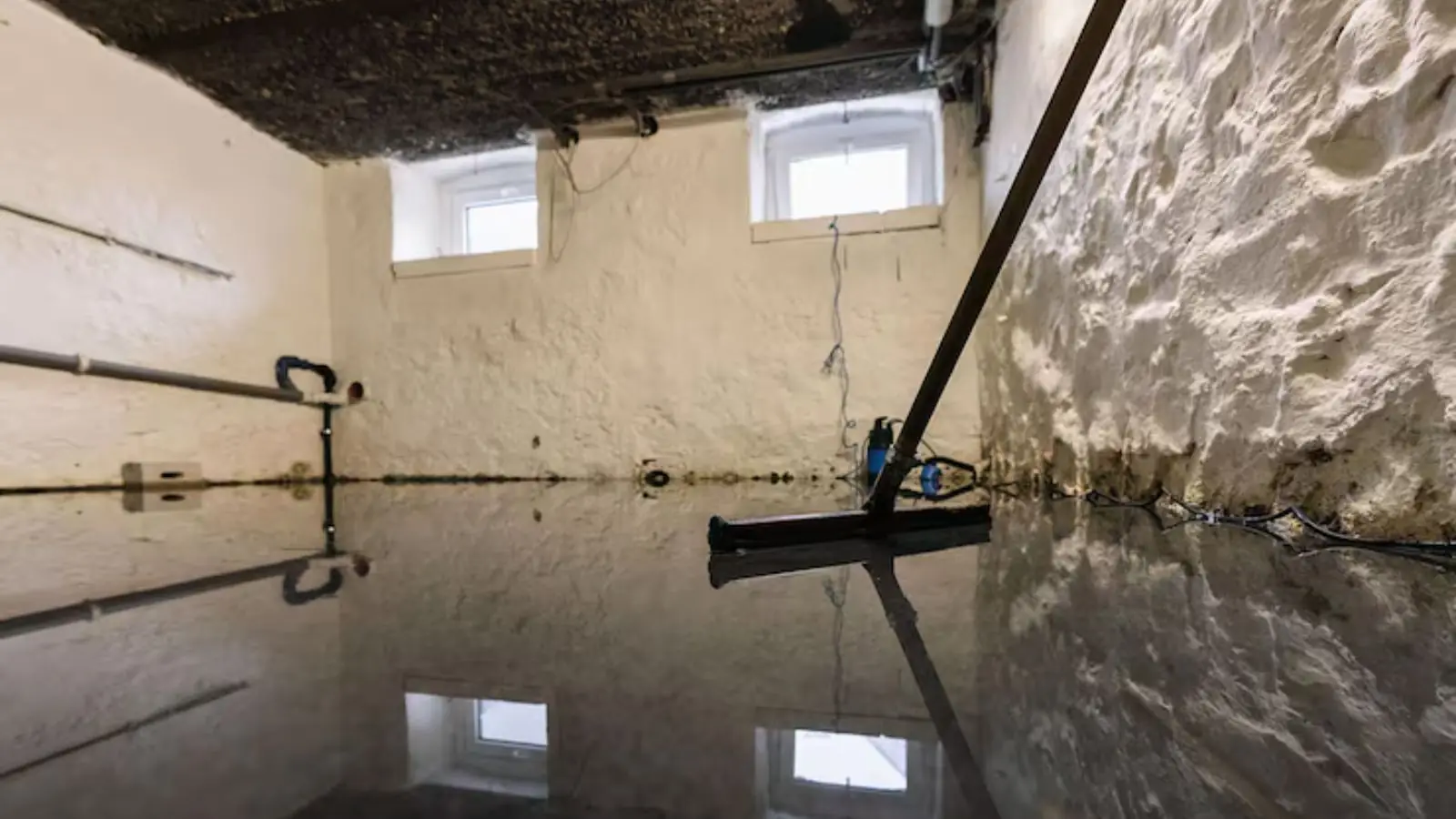
Most homes in the desert have no basement, and we would rather say so than pretend otherwise. But plenty of properties have a low spot that behaves like one: a cellar under an older house, a sunken living room, a crawl space, or a garage slab that sits below the driveway. Water that reaches any of these has nowhere to go.
This guide is written for all of those spaces. If water is pooling in one right now, the steps below come first, and a flood damage restoration crew can take over once the area is safe to enter.
What counts as a basement out here
Think of it by behaviour, not by name. Any floor that sits below the surrounding ground collects water from rain, irrigation runoff, a failed supply line or a backed-up drain. Gravity does the rest.
Common examples in farm-valley housing include a crawl space under a raised foundation, a stairwell down to a utility room, a sunken den, and a garage floor with a drain that stops draining. Each one hides water from view, which is why it often gets found late.
Older farmhouses and some converted outbuildings are the likeliest to have a true cellar. Newer slab homes usually do not, but they still have a garage or utility room that sits lower than the yard.
Before anyone steps into the water
Electricity comes first. If the water touches outlets, a panel, a water heater or an extension cord, stay out. Cut the power only if the panel is dry and safe to reach, and call the utility or 911 for any electrical or gas risk before you call us.
If the source is a supply line or a washer valve, shut off the water at the main. Then take photos from the doorway and write down the time you found it. Those notes help the crew handling your emergency water removal and help any claim later.
- Do not wade in if the water is above outlet height or smells like sewage.
- Do not run a household vacuum on water.
- Move dry valuables upward, but only from safe ground.
- Keep children and pets away from the area.
Why low water is a race
Water in a low area does not drain away on its own. It soaks into the slab, the framing, stored boxes and any drywall, then lingers because the space has little airflow. Mold can start growing within 24 to 48 hours on wet organic material, according to EPA guidance, and a closed cellar gives it everything it needs.
There is also a quality problem. Clean water that sits and touches soil, dust and stored items slowly becomes dirtier water. A day of delay can change how the job has to be handled.
Stored cardboard, fabric and wood shelving act like wicks. They pull water upward and hold it against walls, which gives hidden mold a food source and a damp place to start.
When it becomes Category 2 or 3
Restoration work sorts water by category. Category 1 is clean, such as a broken supply line. Category 2 carries some contamination, such as washer overflow or a sump discharge. Category 3 is grossly contaminated, such as sewage from a floor drain or floodwater carrying soil and runoff.
Time and contact move water up the scale. Category 1 water that sits in a crawl space for days may be treated as Category 2 or 3. Porous materials touched by Category 3 water are usually removed rather than dried.
Photograph the water and note where it came from before anyone starts work. That record helps the crew decide how to handle the space and what protective steps are needed.
How a low area actually gets dried
If there is standing water, an extraction unit removes it first. Then the crew checks wet walls and framing with a moisture meter and a thermal imaging camera, because the surface can look dry while the lower wall holds water.
Air movers push dry air across wet surfaces and LGR dehumidifiers pull moisture out of the air. Drying usually takes several days, and the crew rechecks readings until they match dry reference points. Drywall that stays wet usually has to be cut out.
A crawl space is harder than a room, since the crew works on hands and knees and the soil underneath keeps releasing moisture. Expect more monitoring visits there than in a finished space.
Questions to ask before work begins
Ask the crew what category they believe the water is and why. Ask what will be removed, what will be dried and how they will confirm the space is dry.
A clear answer shows the crew has measured the problem rather than guessed at it. You should hear the scope and the price from the crew lead before any equipment goes in.
If the space also holds a water heater, a furnace or an electrical panel, say so on the call. Those items change how the crew sets up equipment and where they place air movers.
What restoration will not fix
We dry, clean and prepare the space for repair. We do not do waterproofing or foundation repair. If water keeps coming back through a slab or wall, the cause needs a different kind of contractor, and we will tell you that plainly.
Crews reach Coachella addresses on the same all-hours schedule. Indio homeowners can reach the Indio service area through the same dispatch line.
Storms, channels and low rooms in Thermal
Thermal has a desert climate with very hot summers and only a few inches of rain in an average year, but rain can arrive hard and fast. A low garage or crawl space that stays dry for years can take on water in a single storm, so check low areas after any heavy rain.
A Coachella Valley stormwater channel project reach is named for the Thermal Drop Structure, which tells you storm runoff channels run through this area toward the Salton Sea. If your lot sits near a channel or a field edge, runoff can reach a low slab quickly, so keep drains and grading clear before the weather turns.
Low-room water questions in Thermal
Only if the power is off and the water is clean and shallow. A household wet vac is not built for contaminated water or for pulling moisture out of framing. For anything deeper or dirtier, call a restoration crew.
Sometimes it does not. If the water was clean, came up on bare concrete and dried fast, you may be fine. If it reached drywall, stored boxes or a shared wall, have it checked with a moisture meter.
Sewage smell, dark colour and floor-drain backups are strong signs. But a crew has to judge the source and how long it sat. When in doubt, treat it as contaminated and stay out.
Look for a waterline on walls, damp soil smell, and swollen baseboards. Runoff often leaves silt behind. Take photos and call us even if the floor looks dry, since wet framing is not always visible.